A Truck and a Car Moving at Equal Velocity Explained
When a truck and a car are moving with equal velocity, they share the same speed but carry very different amounts of energy and momentum. The truck’s greater mass means it has far more kinetic energy and momentum, which directly impacts braking distance, collision force, and road safety. Understanding these differences helps drivers, students, and anyone curious about physics grasp why size and weight matter on the road.
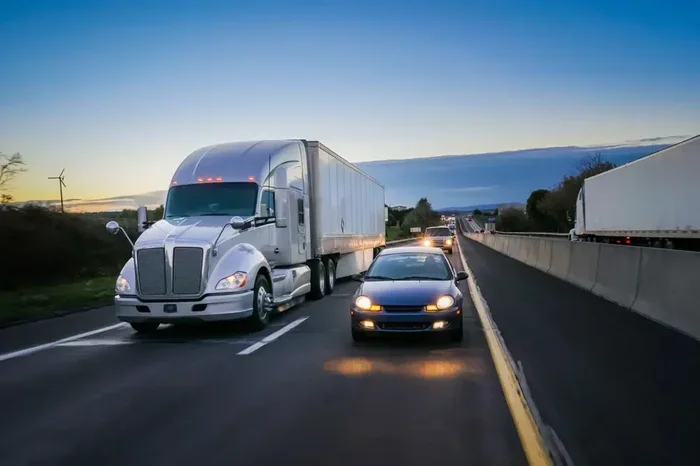
Imagine two vehicles on a straight highway. A massive truck and a sleek car are both cruising at exactly 60 miles per hour. They are moving at the same velocity. But something feels different, right? The truck feels heavier. It takes longer to slow down. And if something goes wrong, the consequences can be far more severe.
This is the fascinating world of a truck and a car are moving with equal velocity. At first glance, it seems simple. Both vehicles go the same speed. But underneath that simple idea lies a rich world of physics, safety, and real-world implications. Whether you are a curious learner, a new driver, or someone who just wants to understand how vehicles work, this topic has a lot to offer.
In this article, we will break everything down in plain language. We will explore the physics, compare real-world numbers, and look at why this concept matters for everyday driving. By the end, you will never look at a truck and a car traveling side by side the same way again.
Key Takeaways
- Equal velocity does not mean equal energy: A truck and a car moving at the same speed still have vastly different kinetic energy due to mass differences.
- Momentum depends on both mass and velocity: The heavier truck carries significantly more momentum, making it harder to stop.
- Braking distance is longer for trucks: Even at equal velocity, a truck needs more distance to come to a full stop compared to a car.
- Collision force increases with mass: In an accident, the truck exerts much greater force because of its weight, even if both vehicles travel at the same speed.
- Inertia plays a major role: The truck resists changes in motion more than the car, which affects handling, turning, and stopping.
- Road safety depends on understanding these differences: Drivers who respect the physics of heavy vehicles stay safer on the road.
- Velocity alone does not tell the full story: Always consider mass and momentum when comparing vehicle movement.
📑 Table of Contents
- What Does It Mean When a Truck and a Car Move at Equal Velocity?
- The Physics Behind Equal Velocity
- How Mass Affects Vehicles Moving at the Same Speed
- Braking Distance: Truck vs Car at Equal Velocity
- Momentum and Kinetic Energy Explained
- Safety Implications of Equal Velocity Between Vehicles
- Practical Tips for Understanding Vehicle Motion
- Common Myths About Equal Velocity
- Conclusion
What Does It Mean When a Truck and a Car Move at Equal Velocity?
Velocity is more than just speed. It includes both how fast something moves and the direction it moves in. So when we say a truck and a car are moving with equal velocity, we mean they cover the same distance in the same amount of time and in the same direction.
But here is the catch. Even though their velocity matches, everything else about these two vehicles is different. The truck weighs much more. It has a bigger engine. It carries more momentum. And it behaves very differently on the road.
Speed Versus Velocity: A Quick Clarification
Many people use speed and velocity as if they mean the same thing. But they do not. Speed tells you how fast something moves. Velocity tells you how fast and in what direction. A car going 60 mph north and a truck going 60 mph north share the same velocity. But a car going 60 mph north and a truck going 60 mph south do not. Their directions differ.
This distinction matters because physics calculations depend on direction. When we study a truck and a car are moving with equal velocity, we assume both the speed and the direction match perfectly.
Why Equal Velocity Is a Useful Comparison
Comparing a truck and a car at the same velocity lets us isolate the effect of mass. If both vehicles travel at 50 mph, any difference in their behavior comes from their weight, shape, or design. This makes equal velocity a perfect baseline for understanding vehicle dynamics.
Think of it like two runners on the same track. One weighs 130 pounds. The other weighs 250 pounds. Both run at exactly 8 miles per hour. The heavier runner carries more energy. The same principle applies to trucks and cars on the road.
The Physics Behind Equal Velocity
Physics gives us the tools to understand exactly what happens when a truck and a car move at the same speed. Two key concepts take center stage: momentum and kinetic energy. Both depend on mass and velocity. And both reveal why the truck and the car behave so differently.
Momentum: Why the Truck Wins (in Energy)
Momentum measures how hard it is to stop a moving object. The formula is simple. Momentum equals mass times velocity. Since the truck has a much larger mass, its momentum is far greater even when both vehicles share the same velocity.
Here is a quick example. A typical car weighs about 3,000 pounds. A standard truck weighs around 8,000 pounds. If both travel at 50 miles per hour, the truck has nearly three times the momentum of the car. That means the truck needs three times more force to stop in the same amount of time.
This is why truck drivers must leave more following distance. Their vehicles carry far more momentum. Even at equal velocity, stopping takes more effort and more space.
Kinetic Energy: The Hidden Danger
Kinetic energy is the energy an object possesses because of its motion. The formula is one-half times mass times velocity squared. Notice that velocity gets squared. This means kinetic energy grows very fast as speed increases.
But mass matters just as much. A truck at the same velocity as a car has much more kinetic energy. In a collision, that extra energy has to go somewhere. It gets transferred into the crash. That is why truck accidents tend to be more destructive than car accidents, even when both vehicles travel at the same speed.
Understanding kinetic energy helps explain why a truck and a car are moving with equal velocity still leads to very different outcomes on the road. The truck simply carries more energy to release.
How Mass Affects Vehicles Moving at the Same Speed
Mass is the amount of matter in an object. A truck has far more mass than a car. When both move at equal velocity, that mass difference creates a ripple effect across every aspect of vehicle performance.
Acceleration and Deceleration Differences
A lighter car accelerates faster than a heavier truck. It also decelerates more quickly. This is basic Newtonian physics. Force equals mass times acceleration. For the same braking force, the truck experiences less deceleration because of its greater mass.
In practical terms, this means a truck takes longer to speed up and longer to slow down. Even when both vehicles start at the same velocity, the truck lags behind in every stop-and-go situation.
Handling and Stability
Mass also affects how a vehicle handles turns, curves, and sudden maneuvers. A truck’s higher mass gives it more inertia. Inertia is the tendency of an object to resist changes in its motion. A truck resists turning more than a car does. This is why trucks often need wider turning radii and why they can feel less nimble on the road.
Drivers of smaller vehicles should always keep this in mind. A truck moving at the same velocity may not be able to react as quickly to sudden changes in traffic or road conditions.
Tire Wear and Road Impact
A heavier vehicle puts more stress on its tires and on the road surface. A truck moving at equal velocity to a car wears down tires faster and causes more road damage. This is why trucks often face different regulations regarding tire maintenance and road use.
The extra weight also means trucks need more robust braking systems. Regular car brakes simply cannot handle the stopping power a loaded truck requires at the same velocity.
Braking Distance: Truck vs Car at Equal Velocity
One of the most important differences between a truck and a car is braking distance. Even when both travel at the exact same velocity, the truck needs significantly more room to stop. This difference can mean the difference between a safe stop and a serious accident.
Why Trucks Need More Distance to Stop
Braking distance depends on three main factors. The vehicle’s mass, its speed, and the friction between the tires and the road. At equal velocity, the truck’s greater mass is the deciding factor. More mass means more kinetic energy to dissipate. More kinetic energy means more braking distance.
Here is a rough comparison. A car traveling at 60 mph might stop in about 240 feet under ideal conditions. A fully loaded truck at the same speed could need 400 feet or more. That is nearly double the stopping distance. And this gap grows even wider when road conditions are wet or icy.
The Role of Braking Systems
Trucks use air brake systems, which are different from the hydraulic brakes found in most cars. Air brakes are powerful but they also take longer to engage fully. This adds to the overall stopping distance for trucks, even when both vehicles share the same velocity.
Regular maintenance of braking systems is critical for trucks. A truck with worn brakes at equal velocity is far more dangerous than a car with the same brake condition. The consequences of a truck failing to stop are always more severe because of its greater mass and energy.
Quick Tips for Safe Following Distance
- Always leave at least 4 seconds of following distance behind a truck.
- Increase this distance in rain, snow, or fog.
- Never cut in front of a truck and brake suddenly.
- Remember that trucks need more space even at low speeds.
- Understand that equal velocity does not mean equal stopping ability.
Momentum and Kinetic Energy Explained
Let us dive a little deeper into the math. These formulas might look intimidating, but they are actually quite simple once you understand the basics. And they explain everything about why a truck and a car behave so differently at equal velocity.
The Momentum Formula
Momentum (p) equals mass (m) times velocity (v). Written as p = m × v. If the truck has three times the mass of the car and both move at the same velocity, the truck has three times the momentum.
Here is a simple comparison table to make this clear.
| Vehicle | Mass (lbs) | Velocity (mph) | Momentum (relative) |
|---|---|---|---|
| Car | 3,000 | 60 | 1x |
| Truck | 8,000 | 60 | 2.67x |
As you can see, the truck carries nearly three times the momentum of the car at the same velocity. This has massive implications for safety, fuel use, and road behavior.
The Kinetic Energy Formula
Kinetic energy (KE) equals one-half times mass times velocity squared. Written as KE = ½ × m × v². Because velocity gets squared, even small speed changes create big energy changes. But mass still plays a huge role.
At equal velocity, the truck’s kinetic energy is roughly 2.67 times greater than the car’s. This extra energy must be absorbed during a collision. It also means the truck uses more fuel to maintain the same speed. The physics is clear: heavier vehicles at the same velocity always carry more energy.
Expert Insight: Why This Matters on the Highway
According to traffic safety researchers, the mass and energy differences between trucks and cars are the leading cause of severe injuries in mixed-vehicle collisions. When a truck and a car collide at similar velocities, the car absorbs far more force. This is why occupant safety in cars is so heavily dependent on avoiding truck accidents in the first place.
Drivers should always respect the physics. A truck moving at equal velocity has the power to cause far more damage. Staying alert, keeping safe distances, and understanding these differences can save lives.
Safety Implications of Equal Velocity Between Vehicles
The physics behind a truck and a car are moving with equal velocity has real-world safety consequences. These consequences affect drivers, passengers, pedestrians, and everyone else on the road.
Collision Force and Damage
In a collision, force is related to how quickly momentum changes. A truck at equal velocity has more momentum to lose. This means the forces involved in a truck accident are much higher. The damage to vehicles and injuries to occupants reflect this difference.
Car safety features like airbags and crumple zones are designed for smaller forces. They may not provide the same protection in a collision with a much heavier truck. This is why truck-car accidents have such high fatality rates.
Rollover Risk
Trucks have a higher center of gravity than cars. At equal velocity, a truck is more likely to roll over during sudden turns or sharp maneuvers. This is another reason why truck drivers must slow down for curves and avoid sudden steering inputs.
Passenger car drivers should also be aware of this risk. Cutting off a truck or braking suddenly in front of one can cause the truck driver to swerve or lose control. The results can be catastrophic.
Road Debris and Tire Blowouts
Trucks carry heavy loads. At equal velocity, a tire blowout on a truck creates a much more dangerous situation. The sudden loss of control is more severe because of the truck’s greater mass and momentum. Debris from a truck tire blowout can also cause serious damage to nearby vehicles.
This is why truck tire inspections are so important. A well-maintained truck at equal velocity is safer for everyone on the road.
Practical Tips for Understanding Vehicle Motion
You do not need to be a physicist to understand the basics of vehicle motion. A few simple concepts can go a long way toward keeping you safe and helping you make smarter driving decisions.
Tip 1: Respect the Weight Difference
Always remember that a truck weighs many times more than a car. Even at the same velocity, the truck has more energy and more momentum. Treat it with the respect that physics demands.
Tip 2: Keep Your Distance
Following distance is your best friend on the road. The more space you give a truck, the more time you have to react. And the more time the truck driver has to stop safely.
Tip 3: Watch for Blind Spots
Trucks have large blind spots. If you cannot see the truck driver in their mirrors, they cannot see you. Stay visible and stay safe, especially when both vehicles are moving at similar speeds.
Tip 4: Understand Weather Impacts
Wet or icy roads affect trucks more than cars. A truck at equal velocity on a wet road needs even more stopping distance. Adjust your driving accordingly and give trucks extra room in bad weather.
Common Myths About Equal Velocity
There are several misconceptions about what it means for a truck and a car to move at the same velocity. Let us clear up a few of the most common ones.
Myth 1: Equal Velocity Means Equal Force in a Crash
This is simply not true. Force in a crash depends on mass and how quickly the vehicle stops. The truck’s greater mass means it exerts far more force during a collision, even at equal velocity.
Myth 2: Trucks Stop Just as Fast as Cars
We covered this already, but it is worth repeating. Trucks need more distance to stop. Their greater mass and different braking systems make this unavoidable. Never assume a truck can stop as quickly as a car.
Myth 3: Velocity Alone Determines Danger
Velocity is important, but it is not the whole picture. Mass, momentum, and kinetic energy all play roles. A truck at 30 mph can be more dangerous than a car at 30 mph because of the energy differences we discussed.
Myth 4: Equal Velocity Means Equal Fuel Use
Trucks use much more fuel than cars, even at the same velocity. Their greater mass requires more energy to move. This is why fuel efficiency is a major concern in the trucking industry.
Conclusion
The concept of a truck and a car are moving with equal velocity opens a window into the fascinating world of physics and road safety. At the same speed, these two very different vehicles carry vastly different amounts of momentum, kinetic energy, and stopping power. The truck’s greater mass changes everything about how it behaves on the road.
Understanding these differences is not just academic. It is practical. It can make you a safer driver, a more informed passenger, and a more respectful road user. The next time you see a truck and a car traveling side by side at the same speed, remember what is really happening beneath the surface. The truck carries far more energy, far more momentum, and far more responsibility.
Keep these lessons in mind every time you get behind the wheel or step onto the road. Respect the physics. Stay alert. And always give trucks the space and consideration they need. Your safety and the safety of others depends on it.
Frequently Asked Questions
What happens when a truck and a car are moving with equal velocity in a collision?
In a collision, the truck exerts much greater force because of its higher mass and momentum. The car absorbs more of the impact energy, which is why truck-car accidents often result in severe damage to the smaller vehicle. The truck’s greater kinetic energy at equal velocity makes it the more destructive force in any crash.
Does equal velocity mean equal stopping distance for a truck and a car?
No, equal velocity does not mean equal stopping distance. A truck needs significantly more distance to stop because of its greater mass and momentum. Even at the same speed, the truck’s kinetic energy is much higher, requiring more braking force and more road distance to come to a complete stop.
Why does a truck feel harder to stop than a car at the same speed?
This happens because of inertia and momentum. The truck has much more mass, which means it resists changes in motion more strongly. Its momentum is much higher at equal velocity, so it takes more force and more time to bring it to a stop.
Is kinetic energy the same for a truck and a car at equal velocity?
No, kinetic energy is not the same. Kinetic energy depends on both mass and velocity. Since the truck has a much greater mass, its kinetic energy at the same velocity is significantly higher. This extra energy is what makes truck collisions so much more powerful.
How can drivers stay safe around trucks moving at equal velocity?
Drivers should maintain a safe following distance, avoid truck blind spots, and never cut in front of a truck. Understanding that trucks need more space to stop and more room to maneuver helps everyone stay safer on the road. Respect the physics of mass and momentum.
Can a car ever match a truck’s momentum at equal velocity?
No, a car cannot match a truck’s momentum at equal velocity because momentum depends on mass. The truck’s much greater weight gives it far more momentum at the same speed. The only way a car could match a truck’s momentum is by traveling at a much higher velocity, which brings its own set of dangers.