Why Cant I Loosen My Lug Nuts Simple Solutions Inside
When you can’t loosen your lug nuts, it can turn a simple tire change into a frustrating roadside nightmare. Seized lug nuts, rust buildup, and over-tightening are the most common culprits behind this stubborn problem. Whether you’re dealing with a broken lug nut, a stripped socket, or a frozen wheel stud, the right approach and tools make all the difference. This guide walks you through every reason your lug nuts won’t budge and gives you clear, actionable solutions you can use today.
There is nothing more embarrassing than standing beside your car with a flat tire and a lug nut that simply will not turn. You push on the wrench. You pull harder. Nothing. Your lug nut stays frozen in place while frustration builds by the second.
This happens to millions of drivers every year. In fact, seized wheel lug nuts are one of the most common roadside problems people face. The good news is that you are not alone, and this problem is almost always solvable. Whether your lug nut removal challenge comes from rust, over-tightening, or a broken tool, we have got you covered. Let us dive into exactly why you cannot loosen your lug nuts and how to fix it step by step.
Key Takeaways
- Rust and corrosion are the #1 reason lug nuts seize up and refuse to budge.
- Using the wrong tools like a short wrench or an ill-fitting socket makes loosening nearly impossible.
- Penetrating oil and heat are two of the most effective methods for breaking free stuck lug nuts.
- Over-tightening during installation is a very common cause of lug nuts becoming immovable.
- Prevention with anti-seize lubricant and proper torque saves you from this headache every time.
- A breaker bar or impact wrench provides the extra leverage needed when standard tools fail.
- Knowing when to call a pro prevents costly damage to your wheel hub and studs.
📑 Table of Contents
- Why Can’t I Loosen My Lug Nuts? The Main Causes
- The Most Common Reasons Lug Nuts Get Stuck
- Tools You Need to Remove Stuck Lug Nuts
- Step-by-Step Guide to Loosening Stuck Lug Nuts
- Preventing Lug Nuts from Seizing Up
- When to Call a Professional
- Common Mistakes People Make When Removing Lug Nuts
- Expert Insights on Lug Nut Maintenance
- Key Takeaways
- FAQ: Why Cant I Loosen My Lug Nuts
- Conclusion
Why Can’t I Loosen My Lug Nuts? The Main Causes
Understanding the root cause is the first step toward a solution. Lug nuts stick for several different reasons, and each one requires a slightly different approach. Here are the most common explanations for stuck lug nuts.
Rust and Corrosion Buildup
This is the number one reason lug nuts won’t budge. When metal meets moisture over time, rust forms between the threads of the wheel stud and the lug nut itself. This corrosion essentially welds the two pieces together. Cars parked near the ocean or driven through salted roads in winter are especially prone to this problem. Even a few months of exposure can create enough rust to lock a lug nut in place.
If you live in a wet climate or your car sits outside year-round, you are at higher risk. The good news is that rust-related seizing is usually easy to fix with the right treatment.
Over-Tightening During Installation
Many people tighten their lug nuts way too much when installing a tire. This is especially true with modern electric impact wrenches that deliver tremendous torque. When you over-tighten, you put extreme pressure on the threads and the hub surface. Over time, this pressure causes the lug nut to become permanently seated. The next time you try to remove it, the nut and stud lock together like they were welded.
Over-tightening also risks damaging the threads on the wheel stud. Once threads are stripped or deformed, removing the lug nut becomes even harder. This is why using a torque wrench for final tightening is so important.
Cross-Threading Damage
When a lug nut does not align properly with the wheel stud and you force it down, the threads can cross. Cross-threading creates uneven contact between the nut and stud. This damage makes future removal extremely difficult because the nut binds up on the damaged threads. You may feel the nut “catch” or “skip” as you try to turn it. Once cross-threading has occurred, the damage only gets worse with each attempt to force the nut on or off.
Lack of Lubrication
Metal-on-metal contact without any lubrication creates friction that builds up over time. Many people skip this step during tire changes. Without anti-seize lubricant or a similar product, the threads can fuse together through a process called galling. This is especially common with aluminum wheels and steel lug nuts, which have different metal properties and tend to bond when they rub against each other.
Heat Warping and Disc Brake Seizure
Cars with disc brakes generate a lot of heat at the wheel. Over time, this heat can cause the brake rotor and hub to expand. When the rotor cools, it can grip the lug nut area tightly. In some cases, the brake caliper bracket itself can shift slightly, putting extra pressure on the lug nut. This heat-related seizing is common on performance vehicles and trucks that haul heavy loads.
The Most Common Reasons Lug Nuts Get Stuck
Let us break down each reason in more detail so you can identify what is causing your specific problem. Knowing the cause helps you choose the best removal method.
Age and Mileage
The older your car and the more miles you have on the odometer, the more likely your lug nuts are to be stuck. A car that has been on the road for ten years or more without proper maintenance will almost always have some degree of corrosion on the lug nuts and studs. High-mileage vehicles are especially vulnerable. If you bought a used car with unknown maintenance history, the lug nuts may already be in rough shape.
Road Salt and Chemical Exposure
Winter road salt is brutal on car hardware. Salt accelerates rust formation dramatically. If you drive in northern states or areas where roads are salted in winter, your lug nuts face constant exposure to corrosive chemicals. Road grime and dirt mix with moisture and salt to create a thick, corrosive paste that coats your lug nuts. Over time, this paste hardens and locks the nut in place.
Wrong Socket Size
This is a simple but very common mistake. If your socket does not fit snugly on the lug nut, it will slip and strip the corners of the nut. A stripped lug nut becomes nearly impossible to remove with a standard wrench. Always double-check that your socket matches the lug nut size before you apply force. Lug nut sizes vary by vehicle, so consult your owner’s manual or look up the spec for your specific make and model.
Stripped or Damaged Lug Nuts
A stripped lug nut has worn-down flats on its edges. This happens when you use the wrong tool, apply force at an angle, or try to remove a nut that is already rusted. Once the flats are stripped, your wrench or socket cannot grip the nut properly. You end up spinning the tool without actually turning the nut. Stripped lug nuts require special removal tools or professional assistance.
Broken Wheel Stud
In some cases, the problem is not the lug nut at all but a broken wheel stud. If the stud snaps inside the hub, the lug nut has nothing to grip and simply spins freely. This is a more serious problem that requires replacing the stud before you can properly secure the wheel. A broken stud often happens when a lug nut is already stuck and you apply excessive force to remove it.
Tools You Need to Remove Stuck Lug Nuts
Having the right tools makes a huge difference when you are dealing with stubborn lug nuts. Using the wrong tool can damage the nut, the wheel, or even your safety. Here is what you should have on hand.
Breaker Bar
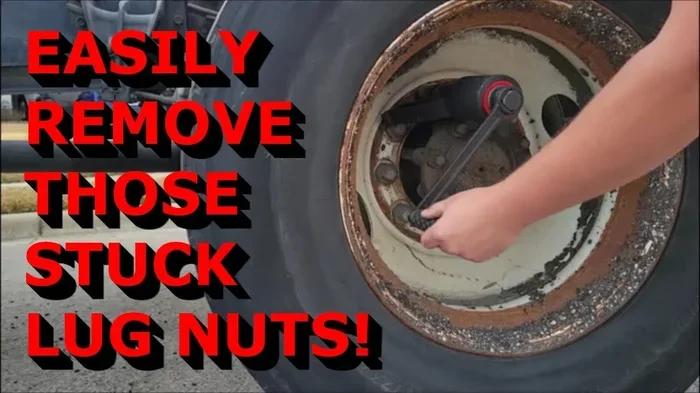
A breaker bar is a long, non-ratcheting bar that attaches to your socket. The extra length gives you much more leverage than a standard lug wrench. This is often the single most effective tool for loosening a stuck lug nut. You can buy a breaker bar at any auto parts store for under twenty dollars. It is one of the best investments you can make for DIY car maintenance.
Impact Wrench
An impact wrench delivers quick, powerful bursts of torque that can break loose even the most seized lug nuts. You can use a pneumatic impact wrench at a shop or an electric impact wrench at home. These tools are incredibly effective but should be used carefully. Apply force in short bursts rather than holding it continuously to avoid damaging the threads.
Penetrating Oil
Penetrating oil is a specially formulated liquid that seeps into the microscopic gaps between rusted metal surfaces. Products like PB Blaster, WD-40 Specialist, or Liquid Wrench work by breaking down the rust bond. You spray it on the lug nut, let it soak for at least fifteen minutes, and then try to turn the nut again. For badly seized nuts, you may need to apply the oil multiple times over several hours.
Heat Source
Applying heat to a stuck lug nut causes the metal to expand, which breaks the rust bond. A simple propane torch or even a heat gun from a hardware store works well. Aim the heat at the lug nut for about thirty seconds, then let it cool slightly before trying to turn it. Be careful not to get heat near the tire, brake lines, or any plastic components. Always have a fire extinguisher nearby when working with open flames.
Socket Set and Lug Wrench
A quality socket set with metric and standard sizes covers most lug nut sizes. A lug wrench that comes with your car works for basic loosening but lacks the leverage needed for stuck nuts. Consider upgrading to a longer breaker bar or a cross-shaped tire wrench for more leverage. A deep socket is also helpful because it seats more firmly on the lug nut than a standard socket.
Anti-Seize Lubricant
Anti-seize lubricant is a paste made of metal particles suspended in a grease base. You apply it to the threads before reinstalling the lug nut. This creates a protective barrier that prevents rust and corrosion from forming. Brands like Loctite, Permatex, and Boeshield make excellent anti-seize products. A small tube costs a few dollars and lasts for many tire changes.
Step-by-Step Guide to Loosening Stuck Lug Nuts
Now that you know the causes and have the right tools, here is a clear step-by-step process to get those lug nuts moving again.
Step 1: Spray Penetrating Oil
Spray the penetrating oil directly onto each stuck lug nut. Make sure the oil gets on the threads and the contact surface between the nut and the wheel. Let it soak for at least fifteen minutes. For badly seized nuts, spray every thirty minutes over a two-hour period. The oil needs time to work its way into the threads and dissolve the rust bond.
Step 2: Apply Heat
After the oil has had time to penetrate, use a propane torch or heat gun to warm the lug nut. Heat it for about thirty seconds, then allow it to cool for ten seconds. The cycle of heating and cooling creates a thermal expansion and contraction effect that helps break the rust bond. Do not overheat the area. Keep the flame moving and never leave it on one spot for too long.
Step 3: Use a Breaker Bar
Attach a socket that fits the lug nut snugly to your breaker bar. Place the breaker bar on the nut and push down firmly. The long arm of the breaker bar gives you extra leverage that a standard wrench cannot match. Push in a clockwise direction to loosen (most lug nuts loosen counterclockwise, but some older vehicles have left-hand threads on the passenger side). If the nut does not move, do not force it. Move to the next step.
Step 4: Try Impact Force
If the breaker bar does not work, try using an impact wrench or even a manual impact tool. A manual impact tool is a hammer-like device that you strike with a mallet. The impact force transfers directly to the lug nut and can break it free without damaging the threads. An electric or pneumatic impact wrench delivers similar results with less effort.
Step 5: Use the Weight of Your Body
Sometimes the simplest method works best. Stand on the breaker bar arm to add your full body weight to the loosening force. This works especially well when the lug nut is only partially seized. Make sure your footing is secure and the breaker bar is on a solid surface before you step on it.
Step 6: Apply More Penetrating Oil and Repeat
If the nut still does not move, spray more penetrating oil and wait another hour. Repeat the heat and impact process. Patience is key. Forcing a stuck nut can strip the threads, break the wheel stud, or damage the brake rotor. Let the penetrating oil do the work for you.
Quick Tips for Stubborn Lug Nuts
- Never use a cheater pipe on your breaker bar. It adds too much leverage and can snap the bar or break the stud.
- Work in a star pattern when loosening lug nuts to prevent warping the brake rotor.
- Keep your breaker bar and sockets clean so they grip properly.
- Use a deep socket for better contact with the lug nut flats.
- Apply penetrating oil from the side of the nut so it runs down into the threads.
Preventing Lug Nuts from Seizing Up
Prevention is always easier than cure. Once you have successfully removed your stuck lug nuts, take these steps to make sure the problem never comes back.
Always Use Anti-Seize Lubricant
This is the single best thing you can do to prevent future seizing. Apply a thin layer of anti-seize lubricant to the threads of every lug nut before you install it. This creates a barrier between the metal surfaces that prevents rust and corrosion from forming. It also makes future tire changes much easier. A little goes a long way, so use just enough to coat the threads lightly.
Torque to the Correct Specification
Every vehicle has a specific lug nut torque specification listed in the owner’s manual. Using a torque wrench ensures you tighten the nuts enough to hold the wheel securely without over-tightening them. Over-tightening is one of the leading causes of seized lug nuts. The proper torque spec for most passenger cars ranges from 80 to 100 foot-pounds, but always check your vehicle’s manual for the exact number.
Reinstall Lug Nuts in a Star Pattern
When tightening lug nuts, always follow a star pattern or cross pattern. This ensures even pressure on the brake rotor and wheel hub. Tightening lug nuts in a circular sequence can warp the rotor and create uneven seating, which leads to future seizing. Start at the top, move to the bottom right, then bottom left, then top left, and finally top right. This method distributes force evenly across the wheel.
Clean the Threads Before Installation
Before reinstalling a lug nut, wipe the threads clean with a rag. Remove any rust, dirt, or old lubricant. Clean threads allow the lug nut to seat properly and reduce the chance of cross-threading. If you notice any damage to the wheel stud threads, replace the stud before reinstalling the wheel.
Store Your Tools Properly
Keep your lug wrench, sockets, and breaker bar in a dry place. Moisture causes tools to rust too, and a rusty socket will not grip a lug nut properly. A simple tool bag or toolbox kept in a dry area of your garage goes a long way toward maintaining your equipment.
When to Call a Professional
There are times when DIY lug nut removal is not the best option. Knowing when to call a professional saves you time, money, and potential damage to your vehicle.
Signs You Need Professional Help
- The lug nut spins freely but will not come off, indicating a broken wheel stud underneath.
- You have tried penetrating oil, heat, and impact tools, and the nut still will not move.
- The lug nut is visibly stripped or damaged and no socket can grip it properly.
- You notice the brake rotor or hub is warped or damaged from over-tightening.
- You are not comfortable working under your vehicle or do not have the right tools.
What a Professional Can Do
A professional mechanic has access to specialized tools like hydraulic impact wrenches, stud extractors, and thread repair kits. They can safely remove even the most severely seized lug nuts without damaging your wheel hub or brake components. If the wheel stud is broken, a mechanic can extract the broken piece and install a new stud quickly. The cost for professional lug nut removal typically ranges from fifty to one hundred fifty dollars, depending on the severity of the seizure.
Roadside Assistance Options
If you are stranded on the side of the road with stuck lug nuts, call a roadside assistance service like AAA or your insurance provider’s towing service. Many roadside plans include tire change assistance. A mobile mechanic can come to you with professional-grade tools and handle the removal safely. This is always a better option than trying to force a stuck nut and risking damage to your vehicle or injury to yourself.
Common Mistakes People Make When Removing Lug Nuts
Avoid these common errors that make the problem worse or cause new problems entirely.
Using the Wrong Socket Size
A socket that is even slightly too small will not seat properly on the lug nut. You end up applying force to the corners of the nut instead of the flat surfaces. This strips the nut and makes removal even harder. Always use the correct socket size for your vehicle. A deep socket is better than a standard socket because it reaches deeper onto the lug nut for a more secure grip.
Applying Force Too Quickly
Yanking on a wrench with full force right away can strip the nut or snap the wheel stud. Always start with steady, moderate pressure. If the nut does not move, apply penetrating oil and wait. Patience saves tools and prevents costly repairs.
Ignoring Rust Buildup
Some people try to force a rusted lug nut without first treating it with penetrating oil. This almost always makes things worse. The rust bond needs to be broken chemically before you apply mechanical force. Skipping the penetrating oil step wastes time and risks damage.
Not Supporting the Vehicle Properly
If your car is not securely jacked up and supported on jack stands, you risk it falling while you are working on the lug nuts. Always use jack stands and never rely solely on a jack to hold the vehicle. Your safety is more important than any tire change.
Over-Tightening New Lug Nuts
After you finally remove the stuck lug nuts and replace the tire, it is tempting to crank them down as tight as possible. Over-tightening creates the exact same problem you just solved. Use a torque wrench to tighten to the manufacturer’s specification. This ensures proper clamping force without damaging the threads or warping the brake rotor.
Expert Insights on Lug Nut Maintenance
Experienced mechanics agree that preventive maintenance is the key to avoiding stuck lug nuts. Here are some professional tips that can save you time and headaches.
Many seasoned technicians recommend applying anti-seize lubricant to lug nut threads every time you rotate your tires or change a flat. This simple habit takes about thirty seconds per wheel and prevents years of potential problems. Some professionals also suggest removing and re-torquing lug nuts after driving the first fifty miles on a new set of tires. This ensures the nuts have settled properly and are at the correct tightness.
Another expert tip is to inspect your wheel studs during every tire rotation. Look for any signs of rust, corrosion, or thread damage. If you spot any issues, replace the stud immediately. A damaged stud is a ticking time bomb that will eventually cause a lug nut to seize or a wheel to come loose while driving.
Mechanics also emphasize the importance of keeping your socket set in good condition. Worn or rounded sockets slip off lug nuts and strip the flats. Replace any damaged sockets immediately. A quality socket set is a small investment that pays for itself many times over in easier tire changes and maintenance.
Key Takeaways
- Rust and corrosion are the #1 reason lug nuts seize up and refuse to budge.
- Using the wrong tools like a short wrench or an ill-fitting socket makes loosening nearly impossible.
- Penetrating oil and heat are two of the most effective methods for breaking free stuck lug nuts.
- Over-tightening during installation is a very common cause of lug nuts becoming immovable.
- Prevention with anti-seize lubricant and proper torque saves you from this headache every time.
- A breaker bar or impact wrench provides the extra leverage needed when standard tools fail.
- Knowing when to call a pro prevents costly damage to your wheel hub and studs.
FAQ: Why Cant I Loosen My Lug Nuts
Can I use WD-40 to loosen stuck lug nuts?
WD-40 is a water displacer, not a true penetrating oil. It works for light surface rust but is not strong enough for badly seized lug nuts. Use a dedicated penetrating oil like PB Blaster or Liquid Wrench for the best results. These products are specifically formulated to break down rust bonds between metal threads.
What size socket do I need for lug nuts?
Most passenger cars use 17mm, 19mm, or 21mm sockets. Trucks and SUVs often require 22mm, 24mm, or larger sizes. Check your vehicle owner’s manual or look up the lug nut size for your specific make and model online. Using the correct socket size is essential for proper grip and to avoid stripping the lug nut.
Is it safe to use a hammer to hit the wrench when removing lug nuts?
A light tap can help break the rust bond, but hitting the wrench aggressively can damage the socket, strip the lug nut, or injure your wrist. A better option is to use a manual impact tool or breaker bar. These tools are designed to deliver controlled impact force without the risk of injury or damage.
How do I know if my wheel stud is broken?
If the lug nut spins freely but does not come off the wheel, the wheel stud underneath may be broken. You can inspect this by removing the wheel and looking at the stud. A broken stud will have a gap or visible break in the metal. In this case, the stud must be replaced before you can properly secure the wheel.
How often should I re-torque my lug nuts?
You should re-torque your lug nuts after driving the first fifty to one hundred miles on a new tire or after any tire service. This ensures the nuts have settled to the correct tightness. After that initial re-torque, check them every time you rotate your tires or perform other wheel-related maintenance.
Can I drive with a loose lug nut?
No, driving with a loose lug nut is extremely dangerous. A loose lug nut can cause the wheel to wobble, come off, or damage the brake rotor and hub. If you notice a lug nut is loose, tighten it immediately or have your vehicle towed to a repair shop. Always use a torque wrench to ensure proper tightness.
Conclusion
Dealing with lug nuts that will not loosen is frustrating, but it is a problem with clear solutions. Whether rust, over-tightening, or a broken tool is the cause, the methods in this guide will help you get back on the road safely. Start with penetrating oil and patience. Add heat and the right tools like a breaker bar or impact wrench. And most importantly, take steps to prevent the problem from happening again by using anti-seize lubricant and a torque wrench during every tire change.
Remember that proper lug nut maintenance is a small effort that pays big dividends. A few minutes of preventive care during each tire rotation can save you hours of frustration and hundreds of dollars in repair costs down the road. Keep your tools organized, your sockets clean, and your lubricant handy, and you will be ready for whatever your wheels throw at you.
If you have tried everything in this guide and your lug nuts still will not budge, do not hesitate to call a professional mechanic. There is no shame in asking for help, and a trained technician can handle even the most stubborn seized lug nuts quickly and safely. Your time and safety are worth more than pushing through a problem that needs expert tools and expertise.