Can Bullets Go Off in a Hot Car During Summer Heat
Yes, bullets can potentially go off in a hot car, but the risk depends on several factors like ammunition type, storage conditions, and temperature levels. Summer heat inside vehicles can reach extreme temperatures that may affect primer sensitivity and gunpowder stability. Understanding how heat impacts ammunition and following proper firearm storage practices can keep you and your family safe during the hottest months of the year.
You might have heard the scary stories. Someone leaves a gun in their car over a hot summer day. Then, chaos ensues. But how much truth is there to these tales? The question of whether can bullets go off in a hot car is one that every gun owner should understand. Summer heat creates dangerous conditions inside vehicles, and your ammunition is not immune to those risks.
Firearm safety is not just about handling guns responsibly. It also involves understanding how environmental factors like heat affect your ammunition. A parked car can turn into an oven fast. Interior temperatures can climb well beyond what most people expect. And when you combine extreme heat with loaded firearms or loose ammunition, the results can be unpredictable.
This article breaks down the science behind heat and ammunition. It covers real risks, common myths, and practical storage tips. Whether you are a seasoned gun owner or just curious about bullet safety in extreme heat, you will find valuable insights here. Let us dive in and separate fact from fiction.
Key Takeaways
- Extreme car temperatures: Vehicle interiors can exceed 200°F, which may affect ammunition integrity.
- Primer sensitivity matters: Some bullet primers are more heat-sensitive than others, increasing risk.
- Proper storage is critical: Using a locked gun safe or insulated container reduces dangers significantly.
- Myth vs. reality: Bullets do not explode like fireworks, but negligent discharge is still a real concern.
- Gunpowder degrades with heat: Prolonged exposure to high temperatures can alter ammunition performance.
- Prevention is simple: Never leave firearms or ammunition in a parked car during summer.
📑 Table of Contents
The Science Behind Heat and Ammunition
To understand whether bullets can go off in a hot car, you need to know what ammunition is made of and how heat affects each component. A bullet is not just a piece of metal. It is a carefully engineered device with several parts that all react differently to temperature changes.
What Makes Up a Bullet
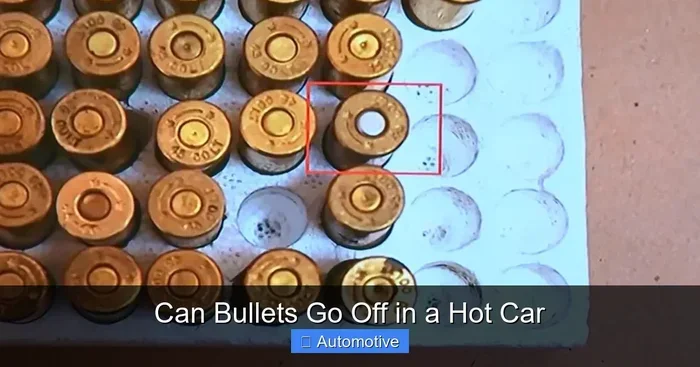
A typical cartridge has four main parts. The casing holds everything together. The primer sits at the base and ignites the gunpowder. The gunpowder creates the explosive force. And the bullet itself is the projectile that flies out of the barrel. Each of these components has a different tolerance for heat.
The primer is the most heat-sensitive part. It contains a small amount of impact-sensitive chemical. When struck by the firing pin, it ignites and sets off the gunpowder. But heat alone can sometimes cause the primer to ignite. This is called a thermal discharge, and it is the main concern with leaving ammunition in hot environments.
How Heat Affects Gunpowder
Gunpowder is a chemical compound that burns rapidly when ignited. Heat can cause gunpowder to degrade over time. When gunpowder degrades, it becomes more unstable. In extreme cases, degraded gunpowder can become more sensitive to ignition. This means it might ignite from a smaller energy source than normal.
However, gunpowder does not just explode on its own from heat alone. It needs a spark or flame to ignite. The real danger comes when heat weakens the primer and makes it more likely to ignite from a stray impact. A bullet dropped on a hard floor in a hot car might behave differently than one dropped at room temperature.
Temperature Thresholds for Ammunition
Most manufacturers design ammunition to be stored at temperatures between 50°F and 85°F. Some military-grade ammunition is tested to withstand higher temperatures. But consumer-grade rounds are not built for extreme conditions. When temperatures exceed 150°F, you start entering dangerous territory for most types of ammunition.
A car parked in direct sunlight during summer can reach interior temperatures of 200°F or more within an hour. That is far beyond what any ammunition is designed to handle. The metal casing can expand. The primer compound can become unstable. And the gunpowder can degrade faster than normal.
What Happens Inside a Hot Car
A parked car is one of the worst places to store ammunition or firearms during summer. The greenhouse effect traps heat inside the vehicle. Windows act like a magnifying glass for sunlight. And there is very little airflow to cool things down.
The Greenhouse Effect in Vehicles
Sunlight passes through car windows easily. Once inside, it heats up surfaces like the dashboard, seats, and floor. These surfaces radiate heat back into the air. But the heat cannot escape easily. The result is a rapid temperature buildup that can turn your car into an oven.
Studies have shown that on a 90°F day, a car interior can reach 170°F in just 30 minutes. After an hour, temperatures can exceed 200°F. On hotter days, the numbers go even higher. Dark-colored cars absorb more heat than lighter ones. Cars with black leather seats get even hotter inside.
How Hot Does a Car Actually Get?
The numbers might surprise you. Here is a breakdown of typical car interior temperatures on a summer day:
- Outside temperature 70°F: Interior reaches 100°F in 20 minutes.
- Outside temperature 85°F: Interior reaches 130°F in 30 minutes.
- Outside temperature 95°F: Interior reaches 170°F in 60 minutes.
- Outside temperature 100°F: Interior can exceed 200°F within 90 minutes.
These temperatures are well above what ammunition manufacturers recommend. Even if a bullet does not go off immediately, prolonged exposure to heat can compromise the integrity of the round. This affects both safety and performance.
Metal Expansion and Casing Integrity
Metal expands when heated. The brass casing of a bullet is no exception. When a casing expands in extreme heat, it can put pressure on the primer and gunpowder. In rare cases, this pressure can cause a round to become unstable. A casing that has expanded significantly might not chamber properly in a firearm later.
Steel-cased ammunition is even more susceptible to heat-related issues. Steel conducts heat faster than brass. This means steel-cased rounds can reach dangerous temperatures more quickly in a hot car environment.
Real Risks and Dangers
So what are the actual risks of leaving ammunition in a hot car? The dangers are real, but they are often misunderstood. Let us look at what can actually happen and how likely each scenario is.
Negligent Discharge
The biggest risk is a negligent discharge. If a loaded round sits in a hot car and the primer becomes thermally sensitive, a sudden impact could cause it to fire. Imagine someone leaning on the car door or a heavy object falling onto the seat. The force combined with a heat-weakened primer could trigger a discharge.
This is not just theoretical. There have been documented cases of firearms accidentally discharging in hot vehicles. In most cases, the gun was loaded and not stored properly. A loaded firearm in a hot car is a recipe for disaster.
Fire and Explosion Risk
While bullets do not explode like fireworks, a mass of ammunition exposed to extreme heat can create a fire hazard. If several rounds discharge simultaneously inside a car, the resulting damage could be significant. Hot brass and gunpowder residue can ignite nearby materials like seat fabric or plastic components.
In extreme cases, a car fire can start from multiple negligent discharges. This is rare, but it does happen. The combination of heat, ammunition, and flammable car materials creates a genuine fire risk.
Degraded Ammunition Performance
Even if a bullet does not go off in the heat, the ammunition can still be damaged. Heat exposure can cause the gunpowder to lose its effectiveness. A round that has been through extreme heat might not fire properly when you need it. This is a serious concern for anyone who relies on their firearm for self-defense.
Degraded ammunition can also cause dangerous malfunctions. A round that fires with reduced pressure might not cycle the action properly. This can lead to jams or incomplete discharges that could injure the shooter.
Children and Unauthorized Access
One of the most overlooked risks is children finding ammunition in a hot car. A child might see a bullet on the seat and pick it up. If the primer has been weakened by heat, even a child dropping the round could cause a discharge. This is a tragic scenario that can be easily prevented with proper storage.
Never leave loose ammunition where children or unauthorized individuals can access it. This is especially true during summer when cars become hot enough to compromise ammunition integrity.
How to Store Firearms Safely in Summer
Prevention is the best approach when it comes to firearm safety in hot weather. A few simple habits can protect your family, your property, and your ammunition from heat-related dangers.
Never Leave Guns in Parked Cars
This is the golden rule of summer firearm safety. A locked glove box is not enough. A center console is not enough. A car is not a safe storage location during summer. The temperatures alone make it too dangerous for any type of ammunition or firearm.
If you must transport a firearm, bring it inside with you. Store it in a locked safe or a dedicated gun storage case. Keep ammunition separate from the firearm. This is the safest approach and follows all standard gun safety rules.
Use a Quality Gun Safe
A proper gun safe is the best investment for any firearm owner. Look for a safe that is rated for fire protection. A fire-rated safe can withstand interior temperatures of up to 1700°F for a limited time. This means your ammunition stays safe even if the safe itself is exposed to heat.
Place your gun safe in a cool, dry area of your home. Avoid garages or sheds that are not climate-controlled. A basement or interior closet is ideal for long-term storage.
Insulated Storage Containers
If you need to store ammunition temporarily in a vehicle during cooler months, consider using an insulated container. These containers help moderate temperature changes and slow down heat transfer. They are not a substitute for proper indoor storage, but they add a layer of protection.
Some gun owners use small thermal bags designed for electronics. These work well for short-term storage of loose ammunition. Just remember that no insulated container can fully protect ammunition from extreme heat over a long period.
Temperature-Controlled Storage
For serious collectors and frequent shooters, a temperature-controlled storage space is the gold standard. A climate-controlled room or safe keeps ammunition at stable temperatures year-round. This preserves ammunition quality and eliminates heat-related risks.
Some gun safes now come with built-in humidity and temperature control features. These advanced safes are worth the investment for anyone who stores large quantities of ammunition or valuables alongside their firearms.
Common Myths About Bullets and Heat
There is a lot of misinformation floating around about bullets and extreme heat. Let us debunk some of the most common myths so you have accurate information.
Myth 1: Bullets Explode Like Bombs in a Hot Car
This is probably the biggest myth. Bullets do not explode on their own from heat alone. A bullet needs a primer ignition to fire. Heat can make the primer more sensitive, but it does not cause a bullet to detonate like a grenade. The idea of bullets exploding in a car is more Hollywood than reality.
That said, a heat-weakened primer can discharge from a sudden impact. This is not an explosion. It is a negligent discharge caused by thermal sensitivity. The distinction matters because it helps you understand the real risk and how to prevent it.
Myth 2: Only Military Ammunition Is Affected
Some people think that only military-grade or surplus ammunition is vulnerable to heat. This is not true. All ammunition is affected by extreme temperatures. Consumer-grade rounds from major manufacturers are just as susceptible to heat damage as surplus military ammunition.
The difference is that military ammunition is often tested to higher standards. But this does not make it immune to heat. No ammunition should be stored in conditions that exceed the manufacturer’s recommended temperature range.
Myth 3: A Short Trip Won’t Cause Problems
Even a quick trip to the store can turn dangerous if you leave ammunition in the car. A 10-minute errand on a 90°F day can push your car interior past 130°F. That is enough to start degrading ammunition quality. Over time, repeated short trips add up and cause cumulative damage to your rounds.
Make it a habit to always take your ammunition inside. It takes just a few extra seconds and eliminates the risk entirely.
Expert Tips for Summer Firearm Safety
Firearms instructors and safety experts agree on several best practices for summer firearm storage. Here are the tips they recommend most often.
Create a Summer Safety Routine
Develop a checklist for summer firearm safety. Before you leave your car, check that all firearms and ammunition are removed. Make this a habit every single time. A checklist helps you avoid forgetting, especially during busy summer schedules.
Some gun owners place a reminder note on their dashboard during summer months. This simple visual cue can prevent a dangerous oversight. It takes two seconds to look and ensures you never leave ammunition in a hot car.
Educate Everyone in the Household
Firearm safety is a family responsibility. Make sure every adult in your household understands the risks of heat and ammunition. Teach children to never touch firearms or ammunition they find. Post basic gun safety rules in a visible location in your home.
Education is one of the most effective tools for preventing accidents. The more everyone understands about heat-related ammunition risks, the safer your household will be.
Inspect Ammunition After Heat Exposure
If you suspect your ammunition has been exposed to extreme heat, inspect it carefully before using it. Look for signs of casing deformation, primer discoloration, or powder leakage. When in doubt, dispose of the ammunition safely.
Do not use ammunition that has been through extreme heat. The performance cannot be guaranteed, and the safety risk is not worth taking. Dispose of compromised rounds at a local shooting range or through proper hazardous waste channels.
Keep a Fire Extinguisher in Your Vehicle
This is a tip that many people overlook. A small fire extinguisher in your car can handle unexpected fires quickly. Choose a compact, automotive-rated extinguisher that is easy to access. This is a smart safety precaution year-round, not just in summer.
While the chance of a fire from ammunition is low, it is not zero. Having an extinguisher on hand gives you peace of mind and adds an extra layer of protection for you and your passengers.
Conclusion
The answer to the question of can bullets go off in a hot car is yes, under certain conditions. Extreme heat can weaken primers, degrade gunpowder, and compromise ammunition integrity. A loaded firearm left in a hot car is a real safety hazard that every gun owner should take seriously.
The good news is that these risks are entirely preventable. With proper storage practices and a little awareness, you can keep your ammunition safe all summer long. Never leave firearms or ammunition in a parked car. Use a quality gun safe at home. And always follow basic firearm safety rules.
Summer heat is no joke. It can turn your car into a dangerous environment for ammunition. Take the precautions outlined in this article and protect your family, your property, and yourself. Bullet safety in summer heat is simple when you know what to do. Stay informed, stay safe, and enjoy a worry-free summer.
Frequently Asked Questions
Can a bullet go off from heat alone without being fired?
In rare cases, yes. A primer weakened by extreme heat can ignite from a sudden impact or pressure change. This is called a thermal discharge and it is the main reason you should never leave loaded ammunition in a hot car. However, bullets do not fire spontaneously without any trigger or impact.
What temperature can cause bullets to discharge?
Most ammunition manufacturers recommend storage below 150°F. Car interiors can exceed 200°F on hot days, which is well into the danger zone. At these temperatures, primers become more sensitive and gunpowder can degrade, increasing the risk of a negligent discharge from impact.
Is it safe to leave an unloaded gun in a hot car?
It is safer than leaving a loaded gun, but it is still not recommended. Heat can damage the firearm’s internal components and any ammunition stored nearby. An unloaded gun can still pose a risk if it is not stored properly and someone accesses it without knowing it was loaded before.
How long does it take for a car to reach dangerous temperatures?
A car can reach 100°F in just 20 minutes on a 70°F day. On a 90°F day, interior temperatures can exceed 170°F within an hour. The rate of heating depends on outside temperature, sun exposure, and vehicle color. There is no safe window for leaving ammunition in a parked car during summer.
What should I do if ammunition has been exposed to extreme heat?
Do not use ammunition that has been through extreme heat exposure. Inspect it for signs of damage like casing deformation or primer discoloration. When in doubt, dispose of it safely at a shooting range or through proper hazardous waste disposal. Replace it with fresh ammunition stored in proper conditions.
Are there specific types of ammunition more prone to heat-related issues?
Yes, ammunition with sensitive primers and older or degraded rounds are more vulnerable. Military surplus ammunition, reloads of unknown origin, and rounds stored in poor conditions for long periods are all higher risk. Always purchase ammunition from reputable manufacturers and store it according to their guidelines.