Does Audi Show Tire Pressure on the Dashboard
Does Audi show tire pressure? Yes, most modern Audis display tire pressure information on the dashboard through a Tire Pressure Monitoring System (TPMS). You’ll see warnings, sensor readings, and reset options depending on your model.
When you slide behind the wheel of your Audi, you expect the dashboard to give you clear, up-to-date information. One question many drivers ask is, does Audi show tire pressure directly on the display? The short answer is yes. Most modern Audis come equipped with a Tire Pressure Monitoring System (TPMS) that keeps an eye on your tires and shares that data with you. But how exactly does it work, what do the lights mean, and can you see exact numbers? In this guide, we’ll walk through everything you need to know about Audi tire pressure displays, from warning lights to reset procedures.
Understanding your Audi tire pressure system is more than a nice-to-have. It helps you stay safe, improves fuel economy, and extends the life of your tires. An underinflated tire can reduce handling and increase stopping distance. That’s why Audi built a smart system that alerts you before a small problem becomes a big one. Whether you drive an Audi A4, Q5, or e-tron, the basics are similar, but the details can vary. Let’s dive in.
Key Takeaways
- Audi TPMS Display: Audis show tire pressure warnings and live readings on the dashboard and instrument cluster.
- Warning Lights: A yellow tire pressure light indicates low pressure, while a fault light suggests sensor issues.
- Reset Procedure: You can reset the TPMS after checking and inflating tires via the MMI system or a button.
- Model Differences: Display features vary across Audi A3, A4, A6, Q5, and e-tron models.
- Manual Check Still Matters: Dashboard readings can lag; use a tire pressure gauge for accuracy.
📑 Table of Contents
- How Audi Tire Pressure Monitoring Works
- Understanding the Tire Pressure Warning Lights
- Which Audi Models Show Tire Pressure on the Dashboard?
- Resetting the Audi Tire Pressure Light
- Common Tire Pressure Problems and Quick Fixes
- Expert Insights on Audi Tire Pressure Systems
- Maintaining Correct Tire Pressure for Your Audi
How Audi Tire Pressure Monitoring Works
Audi uses a direct TPMS in most of its vehicles. This means each wheel has a small sensor inside the valve stem. The sensor measures the actual air pressure inside the tire and sends a wireless signal to the car’s computer. That computer then decides whether to show you a simple warning or a detailed reading.
Direct vs. Indirect TPMS
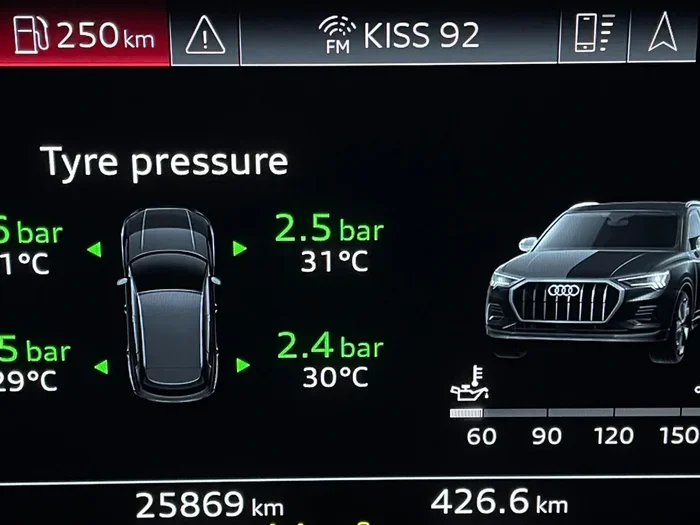
Some cars use an indirect system that estimates pressure by measuring wheel rotation speed. Audi mostly uses direct sensors because they give a precise tire pressure reading. You’ll see a specific number for each tire on the instrument cluster or the MMI screen. Indirect systems can’t tell you the exact PSI, but they can still spot a big drop. The direct system is more accurate for Audi tire pressure monitoring.
What the Sensors Monitor
The sensors track both pressure and, in some models, temperature. Cold weather can temporarily lower pressure, which might trigger a light even if you didn’t have a leak. The system accounts for this by looking at the rate of change. If pressure drops quickly, you’ll get an immediate warning. If it’s a slow leak, the light may come on after a few days of driving. This smart design helps prevent false alarms.
What You See on the Display
On the instrument cluster, you might see a simple yellow tire icon. On higher-end models with a virtual cockpit or MMI screen, you can access a dedicated tire pressure monitoring page. There, you’ll see a bar or a number for each wheel. Some Audis show a green bar for good pressure and a red or yellow bar when it’s low. The display updates in real time, so you can watch the numbers change as you add air.
Understanding the Tire Pressure Warning Lights
The Audi tire pressure warning light is a yellow symbol that looks like a horseshoe with an exclamation point in the middle. When it stays on, it means one or more tires are below the recommended pressure. Here’s what different behaviors mean.
Solid Yellow Light
A solid yellow tire pressure light tells you that at least one tire is significantly underinflated. Pull over safely and check the pressure with a gauge. Don’t ignore this light, even if the car still drives fine. Driving on low tires can cause uneven wear and reduce safety.
Flashing Yellow Light
A flashing light usually indicates a problem with the TPMS sensor itself, not the tire pressure. The sensor battery might be dead, or there could be a communication error. You’ll need to have the system scanned with a diagnostic tool. In the meantime, manually check your tire pressure readings with a handheld gauge.
No Light at All
Just because the light isn’t on doesn’t mean your tires are perfect. The system only triggers when pressure falls below a certain threshold, usually around 25% below the recommended PSI. So a tire that’s slightly low might not set off the light, but it still affects performance. That’s why a regular tire pressure check with a gauge is a good habit.
Recommended Tire Pressure for Audi Models
The correct tire pressure for your Audi depends on the model and load. Here are typical ranges:
- Audi A3: 30-32 PSI
- Audi A4: 32-35 PSI
- Audi A6: 32-35 PSI
- Audi Q5: 33-35 PSI
- Audi Q7: 33-35 PSI
- Audi e-tron: 32-34 PSI
Always check the sticker on the driver’s door jamb for the exact number. The TPMS light will activate when pressure drops below the threshold for that specific model.
Which Audi Models Show Tire Pressure on the Dashboard?
Most Audi models from the past decade show some form of tire pressure information. The exact display depends on your instrument cluster and the model year. Here’s a quick look at what you can expect.
Audi A3 and A3 Sportback
The A3 displays a basic tire pressure warning on the instrument cluster. You’ll see the yellow light when pressure is low, and you can often view individual tire pressures through the MMI system. The display shows a simple bar or percentage for each tire.
Audi A4 and A5
In the A4 and A5, the Audi tire pressure information is more detailed. The driver information screen can show a PSI reading for each tire. You can switch between views using the steering wheel controls. This makes it easy to check pressure without leaving the driver’s seat.
Audi Q5 and Q7
The Q5 and Q7 follow a similar pattern. The MMI screen can display a tire pressure monitoring menu with live readings. Some models also show a color-coded bar that turns red if pressure is critically low. This is especially helpful when loading the vehicle for a trip.
Audi e-tron and Electric Models
Electric Audis like the e-tron also feature TPMS. Because tire pressure affects range and efficiency, these models often emphasize the readings even more. You might see a dedicated tire pressure page on the virtual cockpit display.
| Model | Display Type | Live Readings | Reset Option |
|---|---|---|---|
| A3 (2015+) | Instrument cluster + MMI | Bar graph per tire | MMI menu |
| A4 / A5 (2017+) | Virtual cockpit | PSI per tire | Steering wheel button |
| Q5 / Q7 (2018+) | MMI screen | Bar graph + PSI | MMI or button |
| e-tron (2019+) | Virtual cockpit | PSI per tire | MMI menu |
This table gives you a general idea. Always check your owner’s manual for the exact layout in your specific model year.
Resetting the Audi Tire Pressure Light
Once you’ve checked and corrected the pressure, the warning light won’t always turn off immediately. You need to tell the system that the problem is resolved. Resetting the Audi tire pressure light is a straightforward process.
Reset via the MMI System
- Press the Menu button on the MMI controller.
- Navigate to Vehicle settings.
- Select Tyre Pressure or TPMS.
- Choose Reset Tyre Pressure or System Reset.
- Confirm the reset. The light should turn off after a few minutes of driving.
Reset via a Button
Some Audi models have a dedicated TPMS reset button located below the steering column or on the left side of the dashboard. With the ignition on, press and hold the button until the tire pressure light blinks three times. Release it, and the system will recalibrate.
When the Light Won’t Go Away
If the light stays on after a reset, it could mean the system hasn’t received a signal from a sensor. This often happens in cold weather. Drive the car for about 10 minutes at speeds above 20 mph. The sensors should retransmit the new pressure data. If the light persists, you may need to check the sensor batteries or have a technician scan the system.
Common Tire Pressure Problems and Quick Fixes
Even with a smart system, Audi tire pressure issues can pop up. Here are the most common problems and how to handle them.
Slow Leaks from Valve Stems
The valve stem is the small metal tube that sticks out of the wheel. Over time, the rubber seal can crack, especially in older tires. A slow leak can drop pressure by 1-2 PSI per month. You might not notice until the TPMS warning appears. Quick fix: replace the valve stem or use a cap with a built-in seal.
Temperature Drops
Cold weather causes air inside the tire to contract. A 10-degree drop in temperature can lower pressure by about 1 PSI. In winter, you might see the light come on in the morning and disappear after driving. This is normal, but you should still check the tire pressure readings and top up if needed.
Sensor Battery Failure
Each TPMS sensor has a small battery that lasts around 5-10 years. When the battery dies, the sensor stops transmitting. The car’s computer will then show a TPMS fault light, which might look different from the low-pressure warning. You’ll need a mechanic to replace the sensor. This is a common issue on higher-mileage Audis.
After Tire Rotation or Replacement
When you rotate tires or put on new ones, the sensors move to different wheels. The system might need to relearn the sensor IDs. Some Audi models do this automatically after a reset. Others require a scan tool at the dealership. Always ask your tire shop to relearn sensors after any tire work.
Aftermarket Wheel Compatibility
If you install aftermarket wheels, make sure they come with compatible TPMS valve stems. Some aftermarket wheels use a different snap-in valve that doesn’t fit the original sensor. This can cause air leaks and trigger false warnings. Always ask the tire shop to check compatibility before mounting.
Quick Tips for Audi Tire Pressure
- Check pressure when tires are cold, before driving more than a mile.
- Keep a digital tire pressure gauge in your glovebox.
- Know the recommended PSI for your model—it’s usually on a sticker inside the driver’s door jamb.
- Don’t rely only on the dashboard display; use a gauge for accuracy.
- Reset the TPMS after every pressure adjustment.
Expert Insights on Audi Tire Pressure Systems
We spoke with a certified Audi technician to get the inside scoop on how Audi tire pressure systems behave in real-world conditions.
Expert Insight: “Many Audi owners think the dashboard will tell them everything they need to know. But the system is designed as a backup, not a replacement for regular checks. The sensors can be affected by temperature, battery age, and even signal interference from aftermarket wheels. I always recommend my customers check pressure manually at least once a month.”
Common Mistake: One of the biggest mistakes we see is ignoring a flashing tire pressure light. Drivers assume it’s just a sensor issue and keep driving. In reality, a flashing light often means the system can’t read any sensor at all. This leaves you blind to actual pressure changes. Get it checked promptly.
Another Tip: If you install aftermarket wheels, make sure they come with compatible TPMS valve stems. Some aftermarket wheels use a different snap-in valve that doesn’t fit the original sensor. This can cause air leaks and trigger false warnings.
Maintaining Correct Tire Pressure for Your Audi
Keeping your Audi tire pressure in the right range is simple with a few habits. The recommended pressure is usually between 30 and 35 PSI, but it varies by model and load. You’ll find the exact number on a sticker on the driver’s door frame or in the owner’s manual.
Monthly Check Routine
- Remove the valve cap from each tire.
- Press a tire pressure gauge firmly onto the valve stem.
- Read the PSI and compare it to the recommended number.
- If low, add air in short bursts and recheck.
- Replace the valve cap to keep dirt out.
Seasonal Adjustments
In winter, you may need to add a bit more air to compensate for temperature drops. In summer, heat can increase pressure, so check more often during heat waves. The TPMS will catch big changes, but small seasonal shifts can add up over time.
Long-Term Benefits
Correct tire pressure readings improve your Audi’s handling, braking, and fuel efficiency. Underinflated tires create more rolling resistance, which means your engine works harder. Over time, this can cost you extra at the pump. Properly inflated tires also wear evenly, saving you money on replacements.
Key Takeaways for Audi Tire Pressure
- Audi uses direct TPMS sensors that provide accurate tire pressure data.
- The yellow warning light alerts you to low pressure; a flashing light signals a sensor fault.
- You can view live PSI readings on the MMI or virtual cockpit display in most models.
- Resetting the system after adjusting pressure is essential to clear the light.
- Manual checks with a gauge remain the most reliable method.
So, does Audi show tire pressure on the dashboard? Absolutely. The system gives you both a warning and, in many models, detailed readings. By understanding how it works and staying on top of maintenance, you’ll keep your Audi safe, efficient, and road-ready. Make tire pressure monitoring a part of your regular routine, and you’ll enjoy the peace of mind that comes with knowing your tires are in top shape.
Frequently Asked Questions
Can I see exact tire pressure numbers on my Audi dashboard?
Yes, most modern Audis display exact PSI readings for each tire on the instrument cluster or MMI screen. You can usually switch between a bar graph and a digital number view using the steering wheel controls. Check your owner’s manual for the exact menu path.
Why does my Audi tire pressure light come on in cold weather?
Cold temperatures cause the air inside your tires to contract, which drops the pressure. A drop of just a few PSI can trigger the TPMS warning. This is normal and often resolves after a few miles of driving as the tires warm up. If the light stays on, manually check the pressure.
How do I reset the tire pressure light after inflating my tires?
You can reset the system through the MMI menu under Vehicle > Tyre Pressure > Reset. Some models also have a physical TPMS reset button below the steering column. Hold it until the tire pressure light blinks three times, then release it.
What does a flashing tire pressure light mean on an Audi?
A flashing light usually indicates a fault with the TPMS sensor or its battery, not a low tire. It could also mean the system can’t communicate with one or more sensors. You should have the car scanned with a diagnostic tool as soon as possible.
How often should I check my Audi tire pressure manually?
Even with a working TPMS, it’s a good idea to check pressure manually at least once a month. The system only alerts you when pressure drops significantly, usually by 25% or more. Regular checks catch slow leaks early and help you maintain optimal fuel economy.
Can I drive with the tire pressure light on?
You can drive a short distance if the light is solid yellow and the pressure is only slightly low. However, driving on underinflated tires reduces handling and increases stopping distance. If the light is flashing or you notice a major pressure loss, pull over safely and inspect the tire or call for assistance.