The Real Answer How Many Lexus IS F Models Were Made
The Lexus IS F is a rare and powerful performance sedan that captured the hearts of driving enthusiasts worldwide. Production numbers for the Lexus IS F were limited, with estimates suggesting around 15,000 to 20,000 units were built during its entire production run. This makes the IS F a highly sought-after collector car today, especially for those looking for a thrilling V8 Lexus experience at a more accessible price point.
This is a comprehensive guide about How Many Lexus IS F Models Were Made?.
Key Takeaways
- Limited Production: The Lexus IS F was produced in relatively small numbers, making it a rare find on the used market today.
- V8 Powerhouse: It featured a hand-built 5.0-liter V8 engine producing over 400 horsepower, setting it apart from standard IS models.
- Production Span: The IS F was manufactured from approximately 2007 to 2014, covering two generations of the Lexus IS platform.
- Collector Value: Due to its rarity and performance credentials, the IS F holds strong value and continues to appreciate among enthusiasts.
- Not Just a Sports Car: The IS F offered daily drivability with exotic car performance, making it a practical yet thrilling choice.
- F Sport vs. IS F: Many people confuse the IS F with the F Sport trim, but they are very different vehicles with distinct production numbers.
[FEATURED_IMAGE_PLACEHOLDER]
The Lexus IS F: A Performance Sedan Like No Other
If you have ever walked through a parking lot and spotted a Lexus IS F with its aggressive stance and menacing exhaust note, you know it turns heads. This car is not just another luxury sedan. It is a statement. The IS F represents what happens when Lexus takes their reliable IS platform and drops a screaming V8 engine into it.
But here is the question that keeps popping up in forums and car shows everywhere: how many Lexus IS F models were made? The answer is more interesting than you might think. The production numbers tell a story about rarity, demand, and why this car matters in the Lexus lineup. Whether you are a current owner, a prospective buyer, or simply a car enthusiast, understanding the IS F’s production history gives you a deeper appreciation for what you are dealing with.
The Lexus IS F was never meant to be a mass-market vehicle. It was a limited-production performance sedan built for drivers who wanted something special. From its hand-built engine to its unique tuning, every aspect of the IS F was designed to stand out. And the numbers back that up. We are talking about a car that was produced in relatively small quantities compared to the standard Lexus IS sedan.
In this article, we will dive deep into the production numbers, the history of the model, and why the IS F remains a cult favorite among Lexus enthusiasts. We will also look at what makes this car such a compelling buy in today’s market. So buckle up and let us get into it.
What Exactly Is The Lexus IS F?
Before we get into the numbers, let us make sure we are all on the same page about what the Lexus IS F actually is. The IS F is the high-performance variant of the Lexus IS sedan. The “F” stands for “Flagship,” and it was Lexus’s way of saying, “We can build a sports sedan that is also comfortable enough for daily driving.”
The first-generation IS F debuted in 2007 as a 2008 model. It was powered by a 5.0-liter V8 engine known internally as the 2UR-GSE. This engine was a masterpiece of engineering. It produced 416 horsepower and 371 pound-feet of torque. That is serious power for a sedan that weighs around 3,800 pounds.
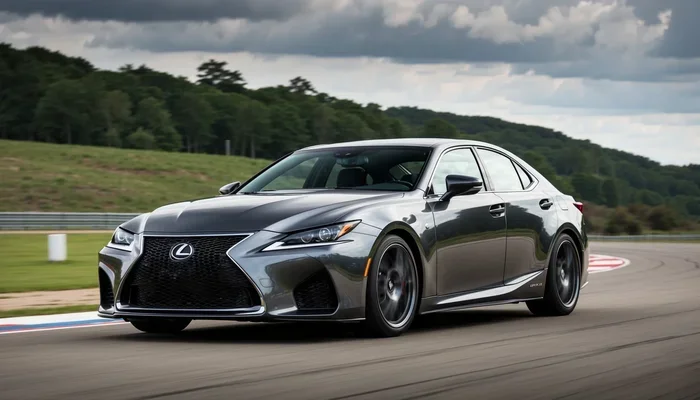
The IS F came with a unique eight-speed automatic transmission, upgraded Brembo brakes, and a sport-tuned suspension. The exterior featured distinctive 19-inch wheels, a larger front grille, and special badging that set it apart from a standard IS 350 or IS 300. Inside, you found bolstered sport seats, unique trim, and a more aggressive driving feel.
Now, here is where people often get confused. The IS F is not the same as the F Sport trim. The F Sport is a performance package available on many Lexus models, including the IS. It includes sportier styling, a tuned suspension, and sometimes a more powerful engine. But the IS F is its own dedicated model with a significantly more powerful engine and exclusive features.
IS F vs. F Sport: What Is The Difference?
This is a common point of confusion, so let us clear it up. The F Sport trim is an appearance and handling package. You can add it to almost any Lexus IS model. It typically includes a sport grille, upgraded wheels, a sport exhaust, and a tuned suspension. The engine options in F Sport models are the same as the standard IS, usually a 2.0-liter turbo four-cylinder or a 3.5-liter V6.
The IS F, on the other hand, is a completely separate model. It has its own unique engine, its own badging, and its own production numbers. When people ask about how many Lexus IS F models were made, they are specifically asking about this dedicated V8 performance variant, not the broader F Sport lineup.
Think of it this way. The F Sport is like adding a sport package to a Honda Civic. The IS F is like having a special Civic Type R with a completely different engine and chassis tuning. They share a name, but they are fundamentally different machines.
The History Of The Lexus IS F
The story of the Lexus IS F begins in the mid-2000s. Lexus was looking to expand its performance lineup and compete with European sports sedans from BMW and Mercedes-Benz. The result was the IS F, which debuted at the 2007 North American International Auto Show in Detroit.
The first-generation IS F (2008-2013) was built at Toyota’s Motomachi plant in Japan, where hand-built engines were a point of pride. Each IS F engine was assembled by a single technician, who signed a plaque attached to the engine bay. This attention to detail gave the IS F a level of craftsmanship that you simply do not find in mass-produced vehicles.
In 2013, Lexus introduced the second-generation IS F alongside the redesigned Lexus IS platform. The new model continued with the 5.0-liter V8 but received some updates to improve performance and efficiency. The second-generation IS F was produced from 2013 to 2014, making it an even rarer find than the first generation.
After 2014, Lexus shifted its performance strategy. Instead of building dedicated high-performance models like the IS F, they introduced the F Sport lineup across their entire range. The IS F name was retired, and the focus shifted to turbocharged engines and hybrid powertrains. This means the IS F has a defined production window that makes it a finite and collectible vehicle.
Why Did Lexus Discontinue The IS F?
There are a few reasons why Lexus moved away from the dedicated IS F model. First, emissions regulations were tightening globally. A 5.0-liter V8 engine in a midsize sedan was becoming increasingly difficult to justify from an environmental standpoint. Second, market trends were shifting toward smaller, turbocharged engines and hybrid powertrains that offered better fuel economy.
Additionally, the F Sport program gave Lexus more flexibility. Instead of building a separate model, they could offer performance upgrades across the entire IS lineup. This allowed them to reach a wider audience while still appealing to enthusiasts. The decision was a smart business move, but it left IS F fans with a finite number of vehicles to cherish.
How Many Lexus IS F Models Were Made
This is the big question, and the answer requires some nuance. Exact production numbers for the Lexus IS F are not always publicly disclosed by Lexus, but industry estimates and enthusiast research have given us a fairly clear picture.
For the first-generation IS F (2008-2013), estimates suggest that approximately 13,000 to 15,000 units were produced for the global market. The majority were sold in the United States, with smaller numbers going to Europe, Japan, and other markets. The US received the largest share, which is good news for American enthusiasts looking to find one today.
The second-generation IS F (2014) was produced in even smaller numbers. Estimates put the global production of the second-gen model at around 2,000 to 3,000 units. This makes the second-generation IS F one of the rarest Lexus models from that era.
When you combine both generations, the total production number for the Lexus IS F comes in at roughly 15,000 to 18,000 units worldwide. To put that in perspective, the standard Lexus IS sedan sells tens of thousands of units per year. The IS F was a fraction of that volume.
Breaking Down Production By Year
While exact yearly breakdowns vary by source, here is a general idea of how production was distributed across the IS F’s lifespan:
- 2008-2010: The early years saw strong production as the IS F was new and exciting. These models are the most common on the used market today.
- 2011-2012: Production remained steady, though the global financial crisis may have slightly dampened demand in some markets.
- 2013: The final year of the first-generation IS F saw a slight increase as enthusiasts rushed to get the last of the model.
- 2014: The second-generation IS F was produced in very limited numbers, making it the rarest of the bunch.
If you are looking at buying a used IS F today, these production numbers explain why they can be hard to find. Every IS F that is still on the road represents a small piece of Lexus history. And because so few were made, each one carries a certain level of exclusivity that standard IS models simply do not have.
Why The Lexus IS F Is So Special
Beyond the production numbers, the IS F is special for a variety of reasons. It is not just about how many were made. It is about what was packed into each one and how it compares to the competition.
The 5.0-liter V8 engine in the IS F is a work of art. It uses a combination of port injection and direct injection, which was cutting-edge technology at the time. The engine redlines at 6,800 RPM and produces a glorious exhaust note that has been described as everything from a “thunderous growl” to a “scream.” When you hear an IS F start up, you know immediately that this is not an ordinary car.
The IS F also holds its own against some of the best performance sedans on the road. With 416 horsepower, it can compete with vehicles that cost significantly more. For comparison, the how much horsepower does a hellcat have is 717 horsepower, but the Hellcat costs nearly twice as much as an IS F ever did. The IS F offers 80 percent of the performance at a fraction of the price.
Reliability is another strong point. Lexus is known for building cars that last, and the IS F is no exception. The 2UR-GSE engine has been used in several Lexus and Toyota models, including the RC F and GS F, and has proven to be incredibly durable with proper maintenance. An IS F with 100,000 miles or more is still a very viable daily driver, provided it has been well cared for.
The IS F In Motorsport
The IS F also made its mark in motorsport. It competed in the VLN Nürburgring Endurance Championship and the Super GT series in Japan. This racing pedigree gave the IS F additional credibility among enthusiasts and proved that the platform was truly capable of high-performance driving.
Lexus also used the IS F as a safety car in some racing series, further cementing its reputation as a serious performance vehicle. While the IS F never became a household name like the BMW M3 or Mercedes-AMG C63, it carved out a loyal following that appreciates its unique combination of luxury, performance, and reliability.
Is The Lexus IS F A Good Investment Today?
If you are considering buying an IS F today, the production numbers should tell you something important. These cars are becoming rarer every year. As they age and mileage accumulates, the supply will only decrease, which could drive values higher over time.
Currently, you can find first-generation IS F models in the $15,000 to $30,000 range depending on condition, mileage, and options. Second-generation models command a premium due to their rarity, often selling for $30,000 to $45,000 or more in clean condition.
If you are looking to buy one, there are a few things to keep in mind. First, check the mileage carefully. Because IS F production was so limited, high-mileage examples are less common but can still be found. A well-maintained IS F with 80,000 miles is still a great buy, but you want to make sure the previous owner kept up with regular maintenance.
Second, consider getting a pre-purchase inspection from a mechanic who is familiar with the 2UR-GSE engine. This engine is generally reliable, but like any high-performance engine, it needs proper care. Check if the vehicle has a clean title and has not been in any major accidents, as IS F values can be significantly impacted by collision damage.
Third, think about resale value. If you are looking at how much you can sell your car for in the future, the IS F is a strong candidate. Its rarity and performance credentials give it a solid foundation for holding value. And if you are trying to negotiate on a used car, the limited production numbers give you leverage. Dealers know these cars are special, and that can work in your favor during price discussions.
Maintenance Tips For IS F Owners
If you already own an IS F or are planning to become one, here are some quick tips to keep your car in top shape:
- Change the oil regularly: The V8 engine in the IS F thrives on fresh oil. Stick to the manufacturer’s recommended intervals.
- Inspect the brakes: The IS F has heavy stopping power, and the Brembo brakes wear faster than standard IS brakes. Keep an eye on pad and rotor condition.
- Protect the paint: The IS F’s paint is beautiful but can be vulnerable to chips and scratches. Consider ceramic coating or paint protection film for long-term protection.
- Store it properly: If you are not driving the IS F regularly, make sure it is stored in a dry, climate-controlled environment to prevent deterioration.
Final Thoughts
The Lexus IS F is a car that deserves more attention than it gets. With production numbers estimated at around 15,000 to 18,000 units worldwide, it is a genuinely rare vehicle that combines exotic car performance with Lexus reliability and luxury. If you are a fan of V8 sedans or simply appreciate well-engineered machines, the IS F should be on your radar.
The answer to how many Lexus IS F models were made tells a story of a car that was built for enthusiasts, not the masses. It was a brief but brilliant chapter in Lexus’s history, and it left behind a legacy that enthusiasts continue to celebrate today. Whether you are looking to buy one, sell one, or simply appreciate it from afar, the IS F is a car that delivers on every level.
So the next time you see an IS F on the road, give it a nod. You are looking at one of fewer than 20,000 of them in the world. That is something special.
Frequently Asked Questions
How many Lexus IS F models were actually produced?
Estimates suggest that approximately 15,000 to 18,000 Lexus IS F models were produced worldwide across both generations. The first generation (2008-2013) accounted for the majority, with roughly 13,000 to 15,000 units. The second generation (2014) was produced in much smaller numbers, around 2,000 to 3,000 units globally.
Is the Lexus IS F the same as the IS F Sport?
No, they are completely different. The IS F is a dedicated high-performance model with a 5.0-liter V8 engine producing 416 horsepower. The F Sport is a performance and appearance package available on standard IS models with smaller engines. The production numbers and specifications are vastly different between the two.
What engine does the Lexus IS F use?
The Lexus IS F is powered by a hand-built 5.0-liter V8 engine designated as the 2UR-GSE. This engine produces 416 horsepower and 371 pound-feet of torque, making it one of the most powerful engines ever offered in a Lexus sedan. Each engine was assembled by a single technician at Toyota’s Motomachi plant in Japan.
Is the Lexus IS F a good daily driver?
Yes, the IS F is surprisingly practical as a daily driver. It offers the comfort and reliability of a Lexus with the excitement of a V8 performance car. The ride quality is refined, the interior is luxurious, and the car is dependable with proper maintenance. It strikes a great balance between performance and usability.
How does the Lexus IS F compare to a BMW M3?
The IS F competes in the same segment as the BMW M3 but takes a different approach. The IS F offers a naturally aspirated V8 with smooth, linear power delivery, while the M3 has historically used turbocharged inline-six engines. The IS F emphasizes comfort and daily livability, while the M3 leans more toward track-focused performance. Both are excellent cars, but they appeal to slightly different tastes.
Are Lexus IS F values increasing?
Yes, IS F values have been trending upward in recent years. The combination of limited production numbers, V8 appeal, and growing interest in naturally aspirated performance cars has made the IS F increasingly desirable. Clean, low-mileage examples are particularly sought after and tend to hold or increase their value over time.