How Long Does It Take to Fully Charge a Car Battery
How long does it take to charge a car battery? The answer depends on your charger’s amperage, battery size, and how dead the battery is. A standard 40-amp charger can recharge most automotive batteries in about 30 minutes to 2 hours, while a slow trickle charger may take 12 to 24 hours. Understanding charging stages and battery capacity helps you pick the right method and avoid damage.
Have you ever turned your key and heard nothing but silence? That sinking feeling hits everyone at least once. A dead car battery can ruin your morning, your plans, and your entire day. But here is the good news. Charging a car battery is straightforward, and knowing the timeline helps you plan ahead.
So, how long does it take to charge a car battery? The short answer is anywhere from 30 minutes to 24 hours. The longer answer depends on several factors, including your charger type, battery size, and how depleted the battery is. In this guide, we break down everything you need to know. Whether you are dealing with a dead battery after leaving your lights on or maintaining a battery during long-term storage, you will find practical answers here.
We will cover every charging method, compare charger types, and share tips that actually work. You will learn why some charges take hours while others take all night. And we will help you avoid the mistakes that shorten your car battery lifespan. Let us dive in.
Key Takeaways
- Charging time varies widely: A 40-amp charger takes 30 minutes to 2 hours, while a 2-amp trickle charger needs 12 to 24 hours.
- Battery size matters: Larger batteries with higher amp hour ratings take longer to fully recharge.
- Never skip the bulk and absorption stages: These charging stages ensure your battery reaches full capacity without damage.
- A trickle charger is best for long-term maintenance: It keeps your battery topped off without overcharging.
- Safety first: Always charge in a ventilated area and wear protective gear to prevent accidents.
- Regular maintenance extends battery life: Simple habits like cleaning terminals and checking voltage go a long way.
- A dead battery can drain from surprising sources: Even a bad key fob can slowly drain your battery over time.
📑 Table of Contents
Understanding Your Car Battery
Before we talk about charging times, it helps to understand what you are working with. Your automotive battery is not just a simple block of metal and acid. It is a carefully engineered device with specific ratings and limits. Knowing these basics makes the charging process much easier to understand.
Battery Capacity and Amp Hours
Every car battery has a capacity rating measured in amp hours, or Ah. This number tells you how much electrical charge the battery can hold. A typical standard car battery has a capacity of about 48 amp hours. This means a fully charged battery rated at 48 Ah can deliver 1 amp for 48 hours, or 2 amps for 24 hours, and so on.
When your battery drains, you need to put that charge back in. The bigger the battery, the more energy it takes to refill it. Think of it like filling a bucket with water. A small bucket fills fast. A large bucket takes more time and more water. The same logic applies to your battery capacity.
Voltage and Battery Health
A healthy car battery reads about 12.6 volts when the engine is off. When you start your car, the voltage drops briefly but should recover quickly. If your battery sits below 12.4 volts for too long, battery sulfation can begin. This is a chemical process that reduces the battery’s ability to hold a charge.
Regularly checking your battery voltage with a simple multimeter can catch problems early. A quick check every few weeks takes less than a minute and can save you from a surprise breakdown. If your voltage reads below 12.0 volts, it is time to consider a charge or a replacement.
Cold Cranking Amps Explained
You may have seen the term CCA on your battery label. CCA stands for cold cranking amps. It measures how much power your battery can deliver at 0 degrees Fahrenheit for 30 seconds without dropping below 7.2 volts. Batteries with higher CCA ratings perform better in cold weather. They also tend to be larger and take longer to charge fully.
How Long Does It Take to Charge a Car Battery With Different Chargers
The type of charger you use is the single biggest factor in charging time. Chargers range from tiny trickle units that add charge over many hours to powerful rapid chargers that can juice up a battery in under an hour. Let us look at each option.
Trickle Charger (1 to 2 Amps)
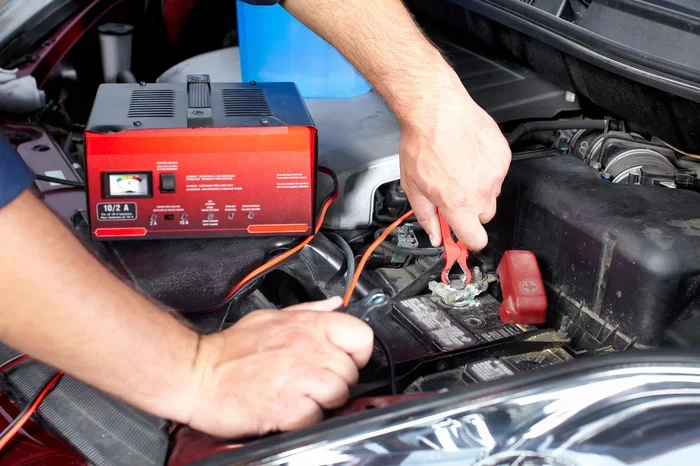
A trickle charger delivers a very low, steady current. It typically provides 1 to 2 amps per hour. This method is gentle on your battery and ideal for long-term storage or maintenance. A trickle charger is also called a battery maintainer because it keeps a battery at full charge without overcharging.
With a 1-amp trickle charger, a fully drained 48 Ah battery takes about 48 hours to recharge. A 2-amp charger cuts that time in half to roughly 24 hours. These chargers are perfect for classic cars, seasonal vehicles, or anything that sits for weeks at a time. They are also very safe and hard to misuse.
One great benefit of a trickle charger is that you can leave it connected for days without worrying about damage. Just make sure you check the battery voltage occasionally. If you want to keep your battery in top shape during the off-season, a trickle charger is your best friend.
Standard Battery Charger (4 to 10 Amps)
A standard battery charger with 4 to 10 amps is the workhorse of home charging. This is what most people reach for when their battery dies. A 4-amp charger will fully recharge a depleted 48 Ah battery in about 12 hours. A 10-amp charger does the job in roughly 5 hours.
These chargers are a great balance of speed and safety. They charge at a rate your battery can handle without generating excessive heat. Most standard chargers also have automatic shutoff features that stop charging when the battery reaches full capacity. This prevents overcharging, which can damage the battery and shorten its car battery lifespan.
If you charge your battery overnight, a 4-amp or 6-amp charger is a perfect choice. You plug it in before bed, and by morning your battery is ready to go. Just make sure you use the correct settings for your battery type, whether it is a standard lead-acid or an AGM battery.
Fast Charger (20 to 40 Amps)
A fast charger delivers 20 to 40 amps and can recharge a dead battery in 30 minutes to 2 hours. These chargers are popular at roadside assistance services and auto parts stores. They are also great for emergencies when you need your car running right now.
However, fast charging comes with trade-offs. High-amperage charging generates more heat inside the battery. Excessive heat can accelerate battery sulfation and reduce long-term battery health. Frequent use of fast chargers can shorten your battery’s overall life.
Use a fast charger only when you need a quick recharge battery solution. For everyday use, stick with a standard or trickle charger. Think of fast charging like eating a meal very quickly. You get fed, but it is not great for your digestion. Your battery feels the same way.
Jump Start vs. Charging
Many people confuse a jump start with charging. A jump start uses power from another vehicle’s battery to crank your engine. It does not actually charge your battery. It just gives your starter motor enough power to turn the engine over. Once the engine is running, your alternator takes over and begins recharging the battery.
A jump start can get you going in minutes. But if your battery was deeply discharged, the alternator may not fully recharge it during a short drive. You should drive for at least 30 minutes after a jump start to allow the alternator to restore some charge. For a full recharge, you still need to connect a proper battery charger.
Also, if you find yourself needing frequent jump starts, your battery may be failing. A battery that cannot hold a charge after a full night of charging likely needs replacement. Do not ignore this sign. A failing battery can leave you stranded again at any moment.
The Charging Process Explained
Understanding how a battery charges helps you appreciate why timing varies. Modern smart chargers use a multi-stage process that protects your battery and maximizes charge efficiency. Each stage serves a specific purpose.
Stage One: Bulk Charging
The bulk stage is where most of the energy goes into the battery. The charger delivers a constant current at high amperage until the battery reaches about 80 percent capacity. This is the fastest part of the charging process. A 40-amp charger can bring a dead battery to 80 percent in roughly 30 to 45 minutes.
Stage Two: Absorption Charging
Once the battery hits 80 percent, the charger switches to absorption mode. The current stays constant, but the voltage tapers down gradually. This stage is crucial for filling the remaining 20 percent of the battery. It takes longer because the battery becomes more resistant to accepting charge as it fills up.
Skipping the absorption stage is a common mistake. If you unplug the charger too early, your battery will not reach full capacity. This leads to shorter driving ranges and a battery that dies again sooner than it should. Always let the charger complete the full cycle.
Stage Three: Float or Maintenance Mode
The final stage is float or maintenance mode. The charger delivers a very low, steady voltage to keep the battery at 100 percent without overcharging. This is the mode used by trickle chargers and battery maintainers. It is perfectly safe to leave the battery connected in float mode for days or even weeks.
Smart chargers automatically move through these stages. Older or cheaper chargers may not have this feature and require you to monitor the process manually. If you use a basic charger, set a timer so you do not overcharge the battery. Overcharging can cause the electrolyte to boil, produce harmful gases, and permanently damage the internal plates.
Factors That Affect Charging Time
Not all charging situations are the same. Several factors influence how long it takes to bring a battery back to full health. Understanding these variables helps you set realistic expectations and avoid frustration.
Battery Size and Type
A larger battery with a higher amp hour rating takes longer to charge. A standard sedan battery with 48 Ah will charge faster than a large truck battery with 80 or 100 Ah. Additionally, different battery types charge at different rates. AGM (Absorbent Glass Mat) batteries generally accept charge faster than traditional flooded lead-acid batteries. Lithium-ion batteries charge the fastest but require compatible chargers.
Depth of Discharge
How dead your battery is matters a lot. A battery that dropped to 12.0 volts after leaving the lights on will recharge faster than a battery that has been sitting at 11.0 volts for weeks. Deep discharges cause more sulfation, which makes it harder for the battery to accept a full charge. If your battery has been deeply discharged multiple times, it may never fully recover.
Charger Amperage
This is the most obvious factor. Higher amperage equals faster charging. But there is a limit. Charging a battery faster than its recommended rate causes heat buildup and can damage the internal structure. Always match your charger amperage to your battery size. A general rule is to charge at a rate that is no more than 20 percent of the battery’s amp hour rating. For a 48 Ah battery, that means a maximum of about 10 amps.
Temperature
Cold weather slows down the chemical reactions inside a battery. A battery charging in a cold garage will take longer than one charging in a warm garage. Extreme heat is also harmful. High temperatures increase the rate of water loss in the electrolyte and can warp internal plates. Ideally, charge your battery in a temperature-controlled environment between 60 and 80 degrees Fahrenheit.
Battery Age and Condition
Old batteries charge slower and hold less capacity. A battery that is three to five years old may not reach full charge even after a full charging cycle. Sulfation builds up over time, creating a barrier between the plates and the electrolyte. If your battery is old and frequently needs charging, it is probably time for a replacement.
Common Mistakes That Damage Your Battery
Charging a battery seems simple enough. But people make mistakes that shorten battery life or even create safety hazards. Avoiding these errors keeps your battery healthy and your car running reliably.
Overcharging the Battery
Leaving a charger connected too long is one of the most common mistakes. Overcharging causes the electrolyte to heat up and break down. It produces hydrogen gas, which is flammable and can be explosive in enclosed spaces. Always use a smart charger with automatic shutoff, or set a timer based on your charger’s amperage and your battery’s capacity.
Using the Wrong Charger
Not all chargers work with all batteries. Using a standard charger on an AGM battery, or vice versa, can cause poor charging and long-term damage. AGM batteries need specific voltage profiles. Lithium-ion batteries need even more specialized charging algorithms. Always check your battery type and match it to the correct charger.
Ignoring Corroded Terminals
Corrosion on battery terminals creates resistance that slows down charging. The charger has to work harder to push current through the buildup. Before you connect a charger, inspect the terminals. If you see white or blue-green powdery buildup, clean it off with a mixture of baking soda and water. A wire brush works well for this. Clean terminals ensure better current flow and faster, more efficient charging.
Charging in an Enclosed Space
Batteries produce hydrogen gas during charging, especially in the bulk and absorption stages. Hydrogen is highly flammable and can ignite from a single spark. Never charge your battery in a closed garage or enclosed basement. Always charge in a well-ventilated area. This is not just good practice. It is a critical safety measure that can prevent serious accidents.
Neglecting Regular Maintenance
Many people only think about their battery when it dies. Regular maintenance prevents that situation. Clean the terminals every few months, check the voltage regularly, and keep the battery securely mounted to prevent vibration damage. If your car sits for long periods, use a battery maintainer to keep the charge level stable.
One often overlooked drain on your battery is a faulty key fob. A bad key fob can drain your car battery over time, especially if it stays close to the vehicle. If you notice your battery dying frequently and you cannot find an obvious cause, check your key fob. Replacing the fob battery or keeping the fob away from the car can solve the mystery drain.
How to Extend Your Car Battery Life
Proper charging habits are just one part of the equation. How you use and maintain your battery on a daily basis has a huge impact on how long it lasts. Follow these practical tips to get the most out of your investment.
- Drive your car regularly. Short trips that last less than 15 minutes do not give the alternator enough time to fully recharge the battery. Take longer drives when possible to keep the battery topped off.
- Turn off accessories before shutting off the engine. Lights, radios, and USB chargers draw power even after the engine is off. Make it a habit to switch everything off before you turn the key.
- Check the battery hold-down clamp. A loose battery vibrates during driving, which damages the internal plates. Make sure the battery is secure in its tray at all times.
- Use a battery tester. A simple battery tester takes the guesswork out of maintenance. Test your battery every few months, especially before winter and summer, when extreme temperatures stress the battery most.
- Replace your battery on schedule. Most car batteries last three to five years. Even if the battery seems fine, consider replacing it after four years to avoid a surprise failure. If you are not sure about the age of your battery, check the date code on the label.
- Keep the battery clean. Dirt and moisture on the battery case can create parasitic drains. Wipe down the battery with a damp cloth every time you pop the hood.
Taking care of your battery also means being prepared for the worst. Keep jumper cables or a portable jump starter in your trunk. You never know when you or someone else will need a jump start. A portable jump starter is compact, easy to use, and can save you from a long walk to find help. It is one of the smartest investments you can make for your vehicle.
When to Replace Instead of Recharge
Sometimes a battery has charged enough times that it simply cannot hold a full charge anymore. How do you know when to replace it instead of trying to recharge it again? There are clear signs that your battery has reached the end of its useful life.
If your battery is more than four years old and needs frequent charging, replacement is the smarter choice. A battery that dies again within a day or two of a full charge is failing internally. The plates are likely damaged, and no amount of charging will restore it to full health.
Also watch for slow cranking. If your engine turns over slowly when you start the car, the battery is struggling to deliver enough power. This is especially noticeable in cold weather when the engine oil is thicker and the starter motor works harder. A slow crank is a warning sign you should not ignore.
If you are unsure whether to replace or recharge, have a professional test the battery. Most auto parts stores offer free battery testing. They can measure the CCA output and internal resistance to give you a clear picture of battery health. A simple test takes two minutes and saves you from buying a new battery too early or keeping a dying one too long.
Remember, a failing battery can also affect other systems in your car. If you find that you are dealing with electrical gremlins, flickering lights, or warning lights on the dashboard alongside a dead battery, the battery is likely the root cause. Do not wait until you are stranded to address the problem.
Conclusion
How long does it take to charge a car battery? The answer ranges from 30 minutes with a fast charger to 24 hours with a trickle charger. The right choice depends on your situation, your battery type, and how urgently you need your car back on the road. For most everyday situations, a standard 4-amp to 10-amp charger gives you the best balance of speed and battery health.
Take the time to understand your battery, use the right charger, and follow safe charging practices. Your automotive battery is the heart of your vehicle’s electrical system. Treat it well, and it will reliably start your car for years to come. Regular maintenance, smart charging habits, and timely replacement when needed will keep you out of trouble and on the road.
Do not wait for a dead battery to teach you these lessons. Start today. Check your battery voltage, clean your terminals, and invest in a quality charger. Your future self, standing in a parking lot with a working car, will thank you.
Frequently Asked Questions
Can I charge my car battery overnight?
Yes, you can charge your battery overnight if you use a smart charger with automatic shutoff. These chargers stop delivering current once the battery reaches full capacity, preventing overcharging. However, avoid leaving a basic manual charger connected for more than 8 to 10 hours without monitoring it.
How do I know if my battery is fully charged?
A fully charged car battery reads 12.6 to 12.8 volts on a multimeter when the engine is off. If your charger has a built-in display or indicator light, it will usually show when charging is complete. Smart chargers also switch to float mode automatically when the battery reaches full charge.
Can a completely dead battery be recharged?
In most cases, yes. A completely dead battery can be recharged with a standard charger. However, if the battery has been dead for a long time or has been deeply discharged multiple times, the internal plates may be damaged. A battery that cannot hold a charge after a full recharge cycle should be replaced.
Is it safe to charge a car battery indoors?
Charging a battery indoors is not recommended. Batteries produce hydrogen gas during charging, which can accumulate in enclosed spaces and create a fire or explosion risk. Always charge your battery in a well-ventilated area like an open garage or outdoor space.
Does cold weather affect battery charging time?
Yes, cold weather significantly slows down the chemical reactions inside a battery. A battery charging in temperatures below 40 degrees Fahrenheit will take longer to reach full capacity. Ideally, charge your battery in a temperature-controlled environment between 60 and 80 degrees Fahrenheit for the best results.
How often should I replace my car battery?
Most car batteries last between three and five years. Even if your battery seems to work fine, consider replacing it after four years to avoid unexpected failure. If you notice slow cranking, frequent jump starts, or a battery that dies after sitting for just a few days, it is time for a replacement. Always have the battery tested before deciding.