How Long Can You Drive With a Failing Alternator Safely
Driving with a failing alternator is risky but sometimes unavoidable in short bursts. Most cars can run for 30 to 60 minutes on battery power alone once the alternator stops charging. The real danger is not the distance but the complete electrical failure that can leave you stuck in traffic or on a highway. This guide covers every symptom, risk factor, and practical step you need to stay safe.
This is a comprehensive guide about How Long Can You Drive With a Failing Alternator?.
Key Takeaways
- Short-distance driving is possible: You may get 30 to 60 minutes of battery-only power after alternator failure.
- Warning signs are clear: Dim lights, dashboard warnings, and strange noises all point to alternator trouble.
- Ignoring the problem is dangerous: A dead alternator can cause stalling, loss of steering, and brake failure.
- Replacement costs vary widely: Expect to pay between $300 and $800 depending on your vehicle model.
- Temporary fixes exist: A jump start or battery charger can buy you time, but they are not permanent solutions.
- Regular maintenance prevents failure: Simple inspections can catch alternator issues long before they leave you stranded.
[FEATURED_IMAGE_PLACEHOLDER]
How Long Can You Drive With a Failing Alternator?
The short answer is not very long. Most vehicles rely on the alternator to keep the battery charged and the electrical system running. Once the alternator starts to fail, your car runs on battery power alone. And car batteries are not designed to sustain a vehicle for more than about 30 to 60 minutes.
But here is the thing — every situation is different. Some drivers report making it a few extra miles. Others find themselves stranded just a few blocks away from home. The difference comes down to battery condition, electrical load, and driving conditions. Let us break it all down so you know exactly what to expect and what to do.
Understanding your alternator is the first step. This small but powerful component converts mechanical energy into electrical energy. It keeps your battery charged and powers everything from your headlights to your radio. When it starts to go, the whole electrical system begins to suffer. The question is not really “can you drive” — it is “how safely can you drive before things go completely wrong.”
What Does a Failing Alternator Actually Do?
To understand how long you can drive, you need to understand what happens when the alternator fails. Your car’s electrical system depends on two main components working together: the battery and the alternator. The battery provides the initial power to start the engine. Once the engine is running, the alternator takes over and keeps everything powered.
When the alternator starts to go bad, it stops replenishing the battery. The battery continues to power your vehicle, but it is slowly draining without being recharged. Think of it like a phone with a cracked charger. The phone works fine for a while, but eventually the battery dies and the phone shuts off.
The Electrical Cascade Effect
Here is where things get tricky. As the battery drains, your car starts cutting power to non-essential systems first. The radio might shut off. The air conditioning may stop working. Then the headlights dim. Eventually, critical systems like power steering and power brakes can lose assistance. This is called the electrical cascade effect, and it happens fast.
Most drivers notice the first signs when the battery warning light flickers on the dashboard. Others hear a grinding or whining noise coming from the engine bay. By the time you experience dimming headlights or flickering dashboard lights, the alternator is already in serious trouble.
How Far Can You Go on Battery Alone?
On a fully charged battery with no alternator output, most cars can travel between 20 and 40 miles at highway speeds. At lower speeds or in stop-and-go traffic, that distance drops significantly because the electrical load is higher. Some vehicles with efficient electrical systems may stretch to 50 miles. Others might only make it 15 miles before stalling.
Compare this to questions like how far past empty a car can go — the alternator situation is even more unpredictable because it depends on so many variables. Your battery age, condition, temperature, and the number of electrical accessories running all play a role.
Warning Signs Your Alternator Is Failing
Catching alternator problems early can save you from a sudden breakdown. The warning signs are usually clear and gradual. Here are the most common symptoms to watch for:
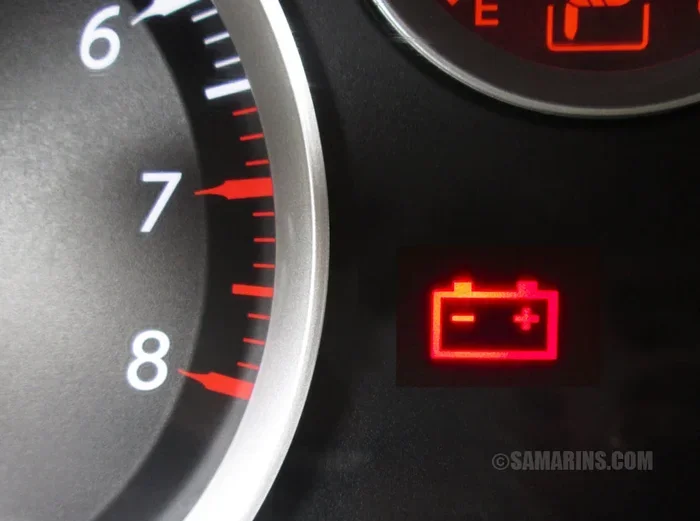
- Dashboard battery light: This is the most obvious sign. The light shaped like a battery illuminates when the charging system detects a problem.
- Dim or flickering headlights: If your headlights get noticeably dimmer at idle or when you turn on the radio, the alternator may not be supplying enough power.
- Strange grinding or whining noises: A failing alternator bearing often produces a high-pitched squeal or grinding sound from the engine compartment.
- Electrical accessories acting up: Power windows slowing down, the radio resetting, or the dashboard dimming are all red flags.
- Battery dying frequently: If you need jump starts often, the alternator is probably not keeping the battery charged.
- Burning smell: An overheating alternator or a slipping belt can produce a noticeable burning odor near the front of the engine.
- Stalling or rough idling: When the electrical system fails, the engine control unit may not receive proper power, causing the engine to stall.
If you notice two or more of these signs, do not ignore them. The alternator will not fix itself. The longer you wait, the closer you get to a complete breakdown.
Can You Still Drive Safely? Understanding the Risks
The honest answer is you can, but only for a short time and with caution. Driving with a failing alternator is like driving with a flat tire — you can limp to the nearest repair shop, but you should not pretend everything is fine.
Here are the real risks you face when you keep driving on a failing alternator:
- Sudden stalling: Without the alternator powering the engine control module, the engine can shut off without warning. This is especially dangerous at highway speeds or in heavy traffic.
- Loss of power steering: Many modern vehicles rely on electric power steering. When the battery dips too low, steering becomes heavy and difficult to turn.
- Brake assist failure: Power brake boosters use vacuum or electrical assist. Low electrical power can reduce braking effectiveness.
- Complete electrical failure: All lights, indicators, and dashboard displays may go dark, leaving you invisible to other drivers.
- Stranded in a dangerous location: A dead alternator often means a dead battery, and a dead battery means you are not going anywhere until someone helps you.
Some drivers wonder if it is similar to driving with a parking brake malfunction — the answer is no, it is actually more serious. A parking brake issue limits your mobility, but a failing alternator threatens the entire electrical backbone of your vehicle.
The 30-Minute Rule
Most mechanics agree on a simple guideline: you have roughly 30 minutes of safe driving time after the alternator fully fails. This assumes your battery is in good condition and you are not running heavy electrical loads. Use this time wisely. Turn off everything non-essential — the radio, the air conditioning, heated seats, and phone chargers. Head straight to the nearest mechanic or a safe location.
If you are on a highway, exit as soon as safely possible. Do not try to push through to your final destination. The risk of stalling in traffic or on a highway shoulder is simply too high.
What to Do When Your Alternator Starts Failing
So your alternator is showing signs of failure. What should you do right now? Follow these steps in order:
Step 1: Turn Off All Non-Essential Electrical Systems
The moment you suspect alternator trouble, cut the power drain. Turn off the air conditioning, radio, heated seats, rear windshield heater, and any phone chargers. Every watt you save extends your battery life and gives you more time to reach safety.
Step 2: Get to a Safe Location
Drive directly to a mechanic, a parking lot, or a well-lit safe area. Do not stop on the highway shoulder unless it is absolutely unavoidable. If your car starts stalling, turn on your hazard lights immediately and pull over.
Step 3: Check the Battery Voltage
If you have a multimeter, check the battery voltage. A healthy battery should read around 12.6 volts with the engine off. With the engine running, it should read between 13.7 and 14.7 volts. If the reading is below 13 volts with the engine running, your alternator is likely not charging properly.
Step 4: Get a Jump Start if Needed
If your battery has already weakened, a jump start can give you enough power to reach a repair shop. Keep in mind that a jump start is a temporary fix, not a permanent solution. The alternator still needs to be repaired or replaced.
Some drivers ask if they can simply replace the battery and keep driving. The answer is no. A new battery will just drain again without a working alternator to recharge it. The root problem must be addressed.
Step 5: Arrange for Towing if Necessary
If your car stalls or you cannot get it to a mechanic safely, call for roadside assistance or a tow truck. It is far cheaper to pay for a tow than to deal with a collision caused by sudden electrical failure at speed.
Alternator Replacement: What to Expect
Once you have the car to a shop, the mechanic will diagnose the alternator and recommend a repair or replacement. Here is what you need to know about the process and costs.
How Mechanics Test the Alternator
A qualified mechanic will use a multimeter to test the alternator output. They will also inspect the serpentine belt, wiring connections, and voltage regulator. Sometimes the problem is not the alternator itself but a loose belt or a bad connection. A thorough diagnosis saves you money by ensuring you only replace what actually needs replacing.
Replacement Cost Breakdown
The cost of replacing an alternator varies based on your vehicle make, model, and year. Here is a general breakdown:
- Parts only: $150 to $450 for most standard vehicles. Luxury or performance vehicles can cost $500 or more for the alternator alone.
- Labor: $100 to $350 depending on the accessibility of the alternator and local labor rates.
- Total cost: Most drivers pay between $300 and $800 for a complete alternator replacement.
Some repair shops offer same-day service for alternator replacement. If the alternator belt also needs replacing, that adds another $50 to $150 to the total cost. It is worth doing both at the same time to avoid labor charges twice.
Can You Replace It Yourself?
If you have basic mechanical skills and the right tools, replacing an alternator is a DIY-friendly job. You will need a socket set, a wrench, and a new alternator that matches your vehicle specifications. However, if you are not comfortable working with electrical components, it is best to leave it to a professional.
Some drivers wonder if they can repair complex car components themselves. While DIY repairs are possible, electrical work carries additional risks if you are not experienced.
Preventing Alternator Failure Before It Happens
The best way to deal with a failing alternator is to prevent it from failing in the first place. Regular maintenance and awareness go a long way toward keeping your charging system healthy.
Simple Maintenance Tips
- Inspect the serpentine belt regularly: Look for cracks, fraying, or glazing. A worn belt puts extra stress on the alternator and can cause it to fail prematurely.
- Keep the battery terminals clean: Corrosion on battery terminals restricts electrical flow and forces the alternator to work harder.
- Avoid excessive electrical load at idle: Running the air conditioning, heated seats, and audio system all at once while idling puts a heavy demand on the alternator.
- Have the charging system tested annually: Most auto parts stores offer free alternator and battery testing. Take advantage of this simple service.
- Address warning signs immediately: Do not wait for the battery light to come on. If you notice dimming lights or strange noises, get your vehicle checked right away.
How Long Does an Alternator Last?
On average, an alternator lasts between 80,000 and 150,000 miles, or roughly 7 to 10 years. However, driving habits, weather conditions, and electrical accessories can shorten or extend that lifespan. Vehicles with high electrical loads or those driven in extreme temperatures tend to wear out alternators faster.
Regular maintenance checks can catch alternator wear early. A mechanic can spot failing bearings, weak diodes, or a worn voltage regulator before they lead to a complete breakdown. This proactive approach saves you from the stress and expense of a sudden alternator failure.
Common Mistakes People Make With a Failing Alternator
When drivers suspect their alternator is going bad, they often make mistakes that make the situation worse. Here are the most common ones to avoid:
- Ignoring the warning light: The battery warning light is your car begging you for help. Ignoring it will lead to a dead battery and a stranded vehicle.
- Replacing the battery instead of the alternator: A new battery will not solve the problem if the alternator is not charging it. You will just drain the new battery too.
- Keeping driving on a bad alternator for too long: Every mile you drive on a failing alternator risks stalling in a dangerous location. Short, purposeful trips only.
- Jump starting without understanding the problem: A jump start gives you temporary power, but it does not fix the underlying alternator issue. You still need professional repair.
- Neglecting the serpentine belt: A loose or cracked belt is one of the leading causes of alternator failure. Inspect it regularly.
Avoiding these mistakes keeps you safer on the road and saves you money on unnecessary repairs. The alternator is a relatively affordable component to replace. Ignoring it turns a simple fix into a major roadside inconvenience.
Frequently Asked Questions
Can you drive 100 miles with a failing alternator?
It is extremely unlikely and very dangerous. Most cars will only run 20 to 40 miles on battery power alone after the alternator fails. Attempting 100 miles risks stalling, electrical failure, and loss of critical systems like power steering and brakes. Do not try it.
What happens if you keep driving with a bad alternator?
Your battery will continue to drain until it can no longer power the engine. The car will stall, and you may lose power steering and brake assist. You could also damage other electrical components like the engine control unit, which is far more expensive to replace than the alternator itself.
How do I know if my alternator or battery is the problem?
A simple test helps distinguish the two. If you jump start the car and it dies again shortly after, the alternator is likely at fault. If the car stays running but the battery dies overnight, the battery itself is probably the issue. A mechanic can test both components accurately.
Can a failing alternator damage the car battery?
Yes, absolutely. A failing alternator forces the battery to work harder than it should. Over time, this deep cycling weakens the battery plates and shortens its lifespan. You may end up needing both a new alternator and a new battery if the problem goes too long without repair.
Is it safe to drive at night with a failing alternator?
No, it is not safe. At night, your headlights and other electrical systems draw maximum power. Without a functioning alternator, the battery drains much faster, and you risk losing all electrical power including headlights, turn signals, and brake lights in the middle of the road.
How much does it cost to replace an alternator?
Most drivers pay between $300 and $800 for alternator replacement, including parts and labor. The cost varies based on your vehicle type, the mechanic’s labor rates, and whether any additional components like the serpentine belt need replacing at the same time.
Final Thoughts
So, how long can you drive with a failing alternator? The honest answer is not long, and not safely for extended distances. You might get 30 to 60 minutes or 20 to 40 miles on battery power alone, but every minute you drive increases the risk of a sudden breakdown. The alternator is not a component you can ignore or postpone fixing.
Your best move is to recognize the warning signs early, reduce electrical load immediately, and get to a mechanic as soon as possible. A failing alternator is a clear signal that your vehicle needs attention. Listening to that signal protects your safety, your wallet, and your peace of mind.
Stay proactive with your vehicle maintenance. Test your charging system regularly, watch for dimming lights and warning indicators, and never push a car with electrical problems too far. A little attention today prevents a major breakdown tomorrow. Drive safe, stay aware, and keep your alternator in good shape.
Frequently Asked Questions
What is How Long Can You Drive With a Failing Alternator??
How Long Can You Drive With a Failing Alternator? is an important topic with many practical applications.