How Long Does It Take to Charge Your BMW Car Battery
Charging a BMW car battery typically takes between 4 and 24 hours depending on the charger type, battery condition, and BMW model. A standard 10-amp charger works best for overnight charging, while a fast charger can top up a drained battery in 2 to 4 hours. Understanding your BMW battery type and following proper charging steps can save you time, money, and unexpected breakdowns.
Your BMW is a precision machine. It demands the right care, the right fuel, and the right battery charge. But here is the question every BMW owner faces at some point: how long does it take to charge your BMW car battery?
The answer is not a single number. Charging time depends on several factors including the charger you use, the battery type, the BMW model, and how drained the battery is. Some BMW owners can get back on the road in a few hours. Others may need to wait overnight. This guide breaks down everything you need to know about BMW battery charging time so you can plan with confidence.
Whether you are dealing with a dead battery after leaving the lights on or you are preparing for a long road trip, understanding the charging process is essential. Let us walk through it step by step.
Key Takeaways
- Charging Time Varies: A fully drained BMW battery takes 4 to 24 hours to charge depending on the charger amperage and battery condition.
- Charger Type Matters: Trickle chargers are slow but safe, while smart chargers and fast chargers offer quicker results.
- BMW Battery Type Is Key: AGM and lithium-ion batteries require specific charging methods compared to standard lead-acid batteries.
- Safety First: Always follow proper safety steps when charging, and never charge a damaged battery.
- Maintenance Extends Life: Regular charging and proper storage can significantly extend your BMW battery lifespan.
- Know When to Replace: If your battery won’t hold a charge, it may be time for a replacement rather than another recharge.
📑 Table of Contents
- Understanding BMW Battery Types and Their Charging Needs
- How Long Does It Take to Charge Your BMW Car Battery
- Factors That Affect BMW Battery Charging Time
- Step-by-Step Guide to Charging Your BMW Battery Safely
- Common BMW Battery Problems and How to Avoid Them
- When to Replace Your BMW Battery Instead of Recharging
- Expert Tips for Extending Your BMW Battery Life
- Final Thoughts on Charging Your BMW Battery
Understanding BMW Battery Types and Their Charging Needs
Not all BMW batteries are the same. BMW uses several battery technologies across its lineup, and each type has different charging characteristics. Knowing which battery your BMW uses is the first step to understanding charging time.
AGM Batteries in BMW Models
Most modern BMW vehicles come equipped with AGM (Absorbent Glass Mat) batteries. These batteries are sealed, maintenance-free, and designed to handle the electrical demands of today’s luxury vehicles. AGM batteries offer excellent cycle life and can handle deep discharges better than traditional lead-acid batteries.
However, AGM batteries require a specific charging profile. They need a charger that supports the correct voltage and charging algorithm. Using the wrong charger can damage the battery or lead to incomplete charges. Always check your BMW owner’s manual or consult your dealer to confirm the battery type before charging.
Lithium-Ion Batteries in Newer BMW Models
Some newer BMW models, particularly the i-series electric vehicles, use lithium-ion batteries. These batteries are entirely different from traditional lead-acid or AGM batteries. They charge much faster and have different voltage requirements. If you own a BMW i3 or i4, your charging experience will be very different from a traditional BMW with a 12-volt battery.
For the purpose of this article, we focus on the 12-volt auxiliary battery found in most BMW sedans, SUVs, and coupes. The lithium-ion high-voltage battery in electric BMWs requires specialized charging equipment and is not covered here.
Standard Lead-Acid Batteries in Older BMW Models
Older BMW models, particularly those from the early 2000s and before, may still use a traditional lead-acid battery. These batteries are more forgiving when it comes to charging. They can handle a wider range of charger types and amperages. However, they also have shorter lifespans and are more prone to sulfation if left discharged for too long.
How Long Does It Take to Charge Your BMW Car Battery
The charging time for a BMW battery depends largely on the charger amperage and the battery’s current state of charge. Here is a general breakdown to help you estimate your charging timeline.
Charging Time by Charger Amperage
Battery chargers come in different amperage ratings. The higher the amperage, the faster the charge. But faster is not always better, especially for sensitive AGM batteries.
- 2-Amp Charger (Trickle Charger): Takes approximately 24 to 48 hours for a fully drained battery. This is the safest option for long-term maintenance charging and is ideal for vehicles stored for extended periods.
- 10-Amp Charger: Takes roughly 10 to 14 hours for a fully drained battery. This is the most popular choice for BMW owners who want a reliable overnight charge.
- 20-Amp Charger: Takes about 5 to 7 hours for a full charge. This is a good middle-ground option for those who need a faster turnaround.
- 40-Amp Charger (Fast Charger): Can charge a fully drained battery in 2 to 4 hours. Use this option sparingly, as high amperage can generate excess heat and may not be ideal for AGM batteries.
Charging Time by Battery Condition
The condition of your BMW battery plays a huge role in charging time. A battery that is only slightly drained will recharge much faster than one that has been completely dead for days. Here are the scenarios:
- Partially Drained (50-75% capacity remaining): Expect charging to take 4 to 8 hours on a 10-amp charger.
- Fully Drained (0-25% capacity remaining): Expect charging to take 10 to 14 hours on a 10-amp charger.
- Completely Dead (sitting for weeks or months): May take 14 to 24 hours or more. In some cases, the battery may not recover at all if it has suffered deep discharge damage.
Keep in mind that a battery that has been completely dead for an extended period may have sulfated plates. Sulfation occurs when lead sulfate crystals build up on the battery plates and harden over time. Once sulfation occurs, the battery may not hold a charge even after extended charging. This is one reason why timely battery maintenance is so important.
BMW Battery Capacity and Charging Time
BMW batteries come in different sizes measured in amp-hours (Ah). A typical BMW 12-volt battery has a capacity of 60 to 80 amp-hours. The formula for estimating charging time is simple:
Charging Time (hours) = Battery Capacity (Ah) / Charger Amperage
For example, a 60 Ah battery on a 10-amp charger would theoretically take 6 hours to charge from completely empty to full. In practice, you should add about 20 to 30 percent more time to account for the bulk-to-absorption charging phases and inefficiencies in the charging process.
| Battery Capacity | 2-Amp Charger | 10-Amp Charger | 20-Amp Charger | 40-Amp Charger |
|---|---|---|---|---|
| 60 Ah | 30-40 hours | 7-9 hours | 3.5-5 hours | 1.5-2.5 hours |
| 70 Ah | 35-45 hours | 8-10 hours | 4-6 hours | 2-3 hours |
| 80 Ah | 40-50 hours | 10-12 hours | 5-7 hours | 2.5-3.5 hours |
These are estimates. Actual charging times may vary based on battery health, temperature, and charger efficiency.
Factors That Affect BMW Battery Charging Time
Several factors can influence how quickly your BMW battery charges. Understanding these factors helps you set realistic expectations and avoid common mistakes.
Battery Temperature
Temperature has a significant impact on battery charging. Cold weather slows down the chemical reactions inside the battery, making it harder to charge. Hot weather can cause the charger to cut off early due to thermal protection. The ideal temperature range for charging a BMW battery is between 50 and 86 degrees Fahrenheit. If you are charging in extreme cold or heat, expect the process to take longer.
Battery Age and Health
An older battery simply cannot charge as efficiently as a new one. As batteries age, their internal resistance increases, and their capacity decreases. A battery that is more than 4 to 5 years old may take longer to charge and may not reach full capacity even after a full charging cycle. If your BMW battery is older than 4 years and showing signs of weakness, consider replacement rather than continued charging.
Parasitic Drain
Modern BMWs have many electronic systems that draw power even when the car is turned off. This is called parasitic drain or phantom drain. If your BMW has a significant parasitic drain, the battery will continue to lose charge while you are trying to charge it. This can extend charging time significantly and may indicate an underlying electrical issue that needs attention.
Charger Quality and Type
Not all battery chargers are created equal. A cheap, basic charger may not deliver consistent amperage or may lack the smart charging algorithms needed for AGM batteries. Investing in a quality smart charger or a charger specifically designed for BMW AGM batteries can make a real difference in both charging time and battery health.
Step-by-Step Guide to Charging Your BMW Battery Safely
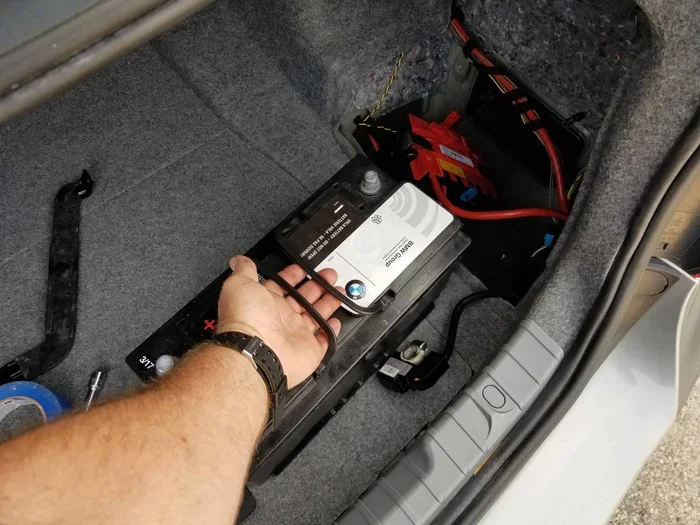
Charging a BMW battery is straightforward, but safety should always come first. BMW batteries are located in various places depending on the model, and some are mounted in the trunk or under the rear seat. Follow these steps carefully.
Step 1: Gather Your Equipment
You will need a compatible battery charger, safety gloves, safety glasses, and a clean cloth. Make sure your charger supports the correct voltage (12 volts) and is compatible with AGM batteries if your BMW uses one.
Step 2: Locate the Battery
Open the hood and locate the battery. In some BMW models, the battery is in the engine bay. In others, it may be in the trunk or under the rear passenger seat. Check your owner’s manual if you are unsure.
Step 3: Disconnect the Battery (If Necessary)
For safety, it is recommended to disconnect the negative terminal first, then the positive terminal. This prevents accidental short circuits. However, if you are using a charger with alligator clips that can connect without disconnecting, you can leave the battery in place. Just be sure the charger is turned off before connecting the clips.
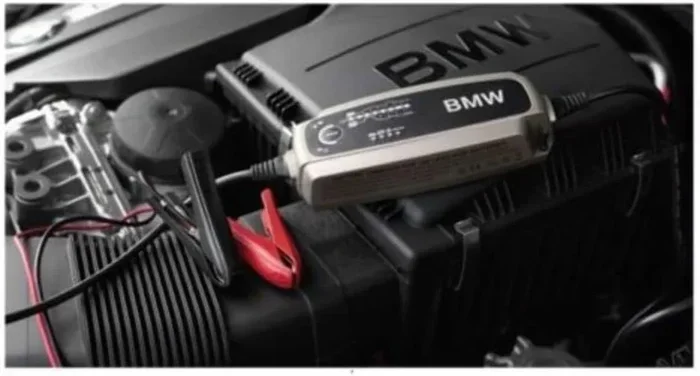
Step 4: Connect the Charger
Connect the positive clamp (red) to the positive battery terminal first. Then connect the negative clamp (black) to the negative terminal or a grounded metal surface on the engine block. Never connect the negative clamp directly to the battery terminal if there is a risk of sparking near the battery, as batteries can emit flammable hydrogen gas.
Step 5: Set the Charger and Start Charging
Set your charger to the appropriate mode for your battery type (AGM, lead-acid, or standard). Start the charger and monitor the process. Most smart chargers will automatically adjust the charging profile and indicate when the battery is full.
Step 6: Disconnect and Test
Once charging is complete, turn off the charger and disconnect the clamps in reverse order (negative first, then positive). Start your BMW to verify the battery is holding a charge. If the engine starts smoothly and the electrical systems work normally, you are good to go.
Quick Tip: If you are unsure about any step, it is always best to consult a professional. Some dealerships and independent shops can charge or test your BMW battery for free or a minimal fee. Before visiting, you may want to check whether do dealers charge a diagnostic fee for battery testing at your local service center.
Common BMW Battery Problems and How to Avoid Them
BMW batteries are not immune to problems. Understanding common issues can help you prevent them and avoid unexpected breakdowns.
Battery Drain After Sitting
BMW batteries are known to drain if the car sits unused for extended periods. If you do not drive your BMW regularly, consider using a trickle charger or a battery maintainer. This keeps the battery topped off and ready to go. A trickle charger is a low-amperage charger that delivers a slow, steady charge ideal for long-term storage.
Corroded Battery Terminals
Corrosion on battery terminals can prevent proper charging and cause starting problems. If you notice white or blueish buildup on the terminals, clean them with a baking soda and water solution and a wire brush. Apply dielectric grease after cleaning to prevent future corrosion.
Failing Voltage Regulator
The alternator charges your BMW battery while the engine is running. If the voltage regulator fails, the alternator may not charge the battery properly. This can cause the battery to drain even while driving. If you notice your dashboard battery warning light flickering or your electrical accessories behaving erratically, have the alternator and voltage regulator checked immediately.
Deep Discharge Damage
Leaving your BMW lights on or using electronics with the engine off can deeply discharge the battery. A deep discharge can cause irreversible damage to the battery plates. If your battery has been deeply discharged and does not hold a charge after several hours of charging, it is time for a replacement. Can a car battery kill you? While the answer is generally no in terms of electrocution, a deeply discharged battery can leak sulfuric acid or even explode if mishandled during charging. Always handle damaged batteries with extreme care.
When a Bad Starter Drains Your Battery
Sometimes the problem is not the battery but the starter motor. A failing starter can draw excessive current and drain the battery even when the engine is not running. If you hear a clicking sound when turning the key but the engine does not crank, the starter may be the culprit. A bad starter can drain a battery over time, leading to repeated dead battery situations.
When to Replace Your BMW Battery Instead of Recharging
Charging is a great temporary solution, but there comes a time when replacement is the better option. Here are the signs that your BMW battery needs to be replaced rather than recharged.
- The battery is more than 4 to 5 years old.
- The battery will not hold a charge after a full overnight charge.
- The engine cranks slowly or struggles to start, even after charging.
- The battery case is swollen, cracked, or leaking.
- The battery warning light on the dashboard stays illuminated.
- You have experienced multiple dead battery episodes within a short period.
When it is time for a replacement, consider whether your BMW battery warranty covers the cost. Some BMW warranties and dealership service plans include battery coverage. If you are unsure about your warranty details, check with your dealer or review your warranty documentation.
Expert Tips for Extending Your BMW Battery Life
Taking care of your BMW battery can add years to its lifespan and save you from unexpected failures. Here are some expert-backed tips.
- Drive your BMW regularly. The alternator needs the engine running to recharge the battery. Short trips may not provide enough time for a full recharge.
- Use a battery maintainer for long-term storage. If you store your BMW for more than two weeks, connect a trickle charger or battery tender.
- Keep the terminals clean. Regular inspection and cleaning prevent corrosion and ensure good electrical connections.
- Avoid leaving electronics on when the engine is off. Lights, audio systems, and climate control can drain the battery quickly.
- Get regular battery tests. Many auto parts stores and dealerships offer free battery testing. This helps you catch weak batteries before they fail.
- Use the right charger. Always use a charger compatible with your battery type. AGM batteries need smart chargers with the correct charging profile.
If you ever need to replace your BMW battery and are wondering about warranty coverage, it is worth checking whether does dealership warranty cover labor for battery replacement at your local dealer. Some BMW warranties include both parts and labor for battery-related issues, which can save you a significant amount of money.
Final Thoughts on Charging Your BMW Battery
So, how long does it take to charge your BMW car battery? The short answer is between 4 and 24 hours depending on your charger, battery type, and battery condition. The long answer is that proper charging comes down to using the right equipment, understanding your battery type, and following safe charging practices.
A healthy BMW battery is the foundation of a reliable driving experience. Whether you drive a sleek 3 Series, a rugged X5, or a luxurious 7 Series, taking care of your battery ensures your BMW starts every time and performs at its best. Do not wait for a dead battery to leave you stranded. Take the time to understand your charging options, invest in a quality charger, and make battery maintenance a regular part of your BMW care routine.
With the knowledge you now have, you can confidently handle a low or dead battery situation. Charge smart, drive safe, and enjoy every mile in your BMW.
Frequently Asked Questions
How long does it take to charge a dead BMW battery?
It typically takes 10 to 24 hours to fully charge a dead BMW battery using a standard 10-amp charger. The exact time depends on the battery capacity, the charger amperage, and the battery’s overall health. Using a 20-amp charger can cut the time down to 5 to 7 hours.
Can I use any battery charger for my BMW?
Not all chargers are suitable for BMW batteries. Modern BMWs use AGM batteries that require a charger with the correct voltage and charging algorithm. Always check that your charger is compatible with AGM batteries before connecting it to your BMW.
Is it safe to leave a battery charger on overnight?
Yes, it is generally safe to leave a smart charger on overnight. Smart chargers automatically adjust the charging rate and switch to a maintenance or float mode once the battery is full. However, always ensure the charger is placed in a well-ventilated area away from flammable materials.
How can I tell if my BMW battery needs replacement?
Signs that your BMW battery needs replacement include slow cranking, frequent dead batteries, a swollen or leaking case, and a dashboard battery warning light. If your battery is more than 4 to 5 years old and showing any of these symptoms, replacement is likely the best option.
Does cold weather affect BMW battery charging time?
Yes, cold weather significantly affects battery charging. Low temperatures slow down the chemical reactions inside the battery, making it harder and slower to charge. In cold weather, expect charging times to increase by 20 to 30 percent compared to normal conditions.
Can I jump-start my BMW instead of charging the battery?
Yes, you can jump-start your BMW using another vehicle or a portable jump starter. However, a jump-start only provides a temporary boost. You should drive your BMW for at least 20 to 30 minutes after a jump-start to allow the alternator to recharge the battery. If the battery repeatedly dies, it may need replacement.