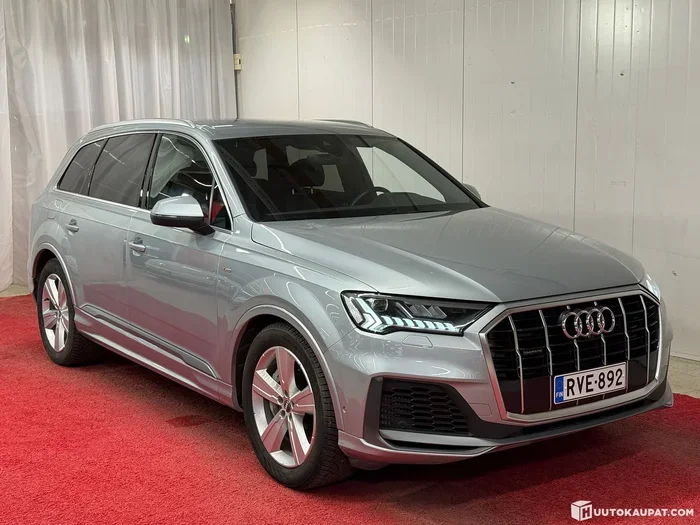
Will Your Audi Q7 Qualify for Section 179 Tax Benefits
Does Audi Q7 Qualify for Section 179? is an essential topic that provides valuable insights.
Key Takeaways
- Understanding Does Audi Q7 Qualify for Section 179?: Provides essential knowledge
📑 Table of Contents
- What Is Section 179 and Why Does It Matter?
- Does the Audi Q7 Qualify for Section 179?
- How the Audi Q7 Stacks Up Against Other SUVs
- Understanding SUV Tax Deduction Rules
- Quick Tips for Maximizing Your Section 179 Deduction
- Common Mistakes to Avoid with Section 179
- Expert Insights on Business Vehicle Tax Deductions
- Key Takeaways
- Conclusion
What Is Section 179 and Why Does It Matter?
Section 179 is a tax code that allows businesses to deduct the full cost of qualifying purchases in the year of purchase. Instead of spreading the cost over several years, you can take a big deduction right away. This is great news for business owners who need to buy vehicles or equipment.
The Section 179 deduction applies to many types of business assets. Computers, office furniture, and yes, even vehicles can qualify. The goal is to encourage businesses to invest in what they need to grow.
How Does the Section 179 Deduction Work?
When you buy a qualifying vehicle, you can deduct its full purchase price from your taxable income. This reduces the amount of tax you owe. For example, if you buy an Audi Q7 for $75,000 and qualify, you can deduct that entire amount in one year.
Here are the basic steps:
- Purchase the vehicle for your business.
- Use it more than 50% for business purposes.
- File Form 8849 with your tax return.
- Claim the deduction on your Schedule C or other business tax forms.
The process sounds simple, but there are important limits. The IRS sets rules on how much you can deduct. These limits change every year, so always check the current numbers.
Why Do Business Owners Love Section 179?
The biggest benefit is tax savings. Instead of waiting years to recover your cost, you get the full deduction upfront. This frees up cash flow for your business. It also simplifies your tax planning because you do not need to track depreciation over many years.
Many business owners also love the flexibility. You can choose to take the deduction or not. If your income is low one year, you might skip it and save it for a year when the deduction matters more.
Does the Audi Q7 Qualify for Section 179?
The Audi Q7 is a large luxury SUV. It has a lot going for it when it comes to Section 179 eligibility. But qualifying depends on several factors. Let us break them down.
Vehicle Gross Vehicle Weight Rating (GVWR)
The IRS looks at the vehicle’s GVWR, which stands for Gross Vehicle Weight Rating. This is the maximum weight the vehicle can safely carry. For a vehicle to qualify for the full Section 179 deduction, it must meet certain weight requirements.
The Audi Q7 typically has a GVWR over 6,000 pounds. This puts it in a favorable category. Vehicles over 6,000 pounds GVWR are eligible for the full SUV tax deduction under Section 179.
However, you should always check the exact GVWR for your specific model year. Different trims and configurations can vary. You can find this information on the vehicle door sticker or in the owner’s manual.
Cost Limits for Section 179 Vehicles
The IRS sets a vehicle cost limit for Section 179 deductions. For 2024, the limit for passenger vehicles is $20,000. This means you can only deduct up to $20,000 of the vehicle’s cost in the first year.
But wait, there is more. The overall Section 179 deduction limit for all qualifying property is $1,220,000 in 2024. This is the total amount you can deduct across all assets. The vehicle limit is separate and lower.
Here is a quick comparison of the key limits:
- Overall Section 179 limit: $1,220,000
- Vehicle deduction limit: $20,000
- Audi Q7 purchase price: Typically $70,000 to $100,000+
This means you can only deduct $20,000 of your Audi Q7 purchase in the first year under Section 179. The rest of the cost would need to be handled through regular depreciation.
Business Use Percentage Requirement
The IRS requires that the vehicle be used for business more than 50% of the time. This is the business use percentage rule. If you use your Audi Q7 60% for business and 40% for personal use, you can claim the full Section 179 deduction up to the $20,000 limit.
If your business use drops below 50%, you lose eligibility for the full deduction. You would need to switch to standard depreciation methods instead.
Keep good records of your business mileage. Use a mileage tracking app or keep a log. The IRS can ask for proof during an audit. Strong records protect you.
How the Audi Q7 Stacks Up Against Other SUVs
Not all SUVs are created equal when it comes to tax deductions. Let us compare the Audi Q7 with a few other popular options.
Audi Q7 vs. BMW X5
Both the Audi Q7 and the BMW X5 are luxury SUVs. Both have GVWR over 6,000 pounds. Both can qualify for the Section 179 deduction up to $20,000.
The main difference is the purchase price. The Audi Q7 and BMW X5 sit in similar price ranges. Your tax write-off would be the same for both under Section 179 rules.
Audi Q7 vs. Ford Expedition
The Ford Expedition is a full-size SUV with a GVWR over 6,000 pounds. It also qualifies for the Section 179 vehicle deduction. The tax deduction limit is the same $20,000.
The big difference is price. The Ford Expedition costs much less than the Audi Q7. This means more of its cost falls within the Section 179 deduction limit.
Audi Q7 vs. Mercedes G-Class
The Mercedes G-Class is another luxury SUV. It also qualifies for Section 179 because of its high GVWR. The vehicle depreciation rules apply the same way.
However, the G-Class is even more expensive than the Q7. This means a smaller portion of its cost falls under the Section 179 deduction limit.
Understanding SUV Tax Deduction Rules
The IRS has specific rules for SUV tax deductions. These rules apply to passenger vehicles, including the Audi Q7. Understanding them helps you plan your tax strategy.
The Two-Limit System
The IRS uses a two-limit system for vehicle deductions. The first limit is the Section 179 deduction limit of $20,000 for passenger vehicles. The second limit is the overall Section 179 cap of $1,220,000 for all qualifying property.
You must stay under both limits. If you buy multiple vehicles, the $20,000 per-vehicle limit still applies to each one.
Bonus Depreciation as an Alternative
If the Section 179 deduction does not cover enough, you might consider bonus depreciation. This allows you to deduct a large percentage of the vehicle’s cost in the first year.
For 2024, bonus depreciation is 60%. This means you can deduct 60% of the remaining cost after the Section 179 deduction. This can significantly reduce your tax liability.
However, bonus depreciation is phasing down. It will decrease in future years. Plan your vehicle purchase deduction strategy accordingly.
Depreciation Schedule for the Audi Q7
If you do not take the full Section 179 deduction, the Audi Q7 follows the standard depreciation schedule. Luxury passenger vehicles are depreciated over 5 years using the Modified Accelerated Cost Recovery System (MACRS).
Here is a simplified look at the depreciation schedule:
- Year 1: 20% of cost
- Year 2: 32% of cost
- Year 3: 19.2% of cost
- Year 4: 11.52% of cost
- Year 5: 11.52% of cost
- Year 6: 5.76% of cost
Using Section 179 lets you skip this slow schedule and take a bigger deduction upfront.
Quick Tips for Maximizing Your Section 179 Deduction
Want to get the most out of your Audi Q7 Section 179 deduction? Follow these quick tips.
Track Your Business Miles Carefully
Keep a detailed log of every trip. Note the date, destination, purpose, and miles driven. Apps like MileIQ or Everlance make this easy. The IRS loves documentation.
Buy Before December 31
The Section 179 deduction applies to vehicles purchased and placed in service during the tax year. If you buy your Audi Q7 in December, you can claim the deduction for that tax year.
Consult a Tax Professional
Tax laws change every year. A tax professional can help you navigate the rules. They can also help you combine Section 179 with bonus depreciation for maximum savings.
Keep Your Receipts
Save all purchase documents, including the invoice, title, and registration. These prove the vehicle’s cost and purchase date. They are essential if the IRS ever questions your tax write-off.
Common Mistakes to Avoid with Section 179
Avoiding mistakes saves you time, money, and headaches. Here are the most common errors business owners make.
Assuming All Vehicles Qualify
Not every vehicle qualifies for the full Section 179 deduction. The IRS has strict rules about vehicle type, weight, and use. Always verify eligibility before claiming the deduction.
Ignoring the Business Use Requirement
If you use your Audi Q7 mostly for personal errands, you cannot claim the full deduction. The IRS requires more than 50% business use. Failing to meet this requirement can trigger an audit.
Exceeding the Dollar Limits
It is easy to forget the $20,000 vehicle deduction limit. If you try to deduct more than allowed, the IRS will disallow the excess. This can result in penalties and interest.
Forgetting to File the Right Forms
You must file Form 8849 to claim the Section 179 deduction. Simply forgetting to file the form can mean missing out on your deduction entirely.
Expert Insights on Business Vehicle Tax Deductions
Tax professionals agree that the Audi Q7 is a strong choice for business owners who want both luxury and tax benefits. The high GVWR and SUV classification work in your favor.
However, experts also warn against overcomplicating your tax planning. Keep it simple. Track your business use, stay within the limits, and consult a professional when in doubt.
The Section 179 deduction is a powerful tool. But it works best when used correctly. Take the time to understand the rules, and you will reap the rewards.
Key Takeaways
- The Audi Q7 can qualify for Section 179: Its GVWR over 6,000 pounds makes it eligible for the Section 179 deduction.
- The deduction is capped at $20,000: This is the per-vehicle limit for passenger SUVs under Section 179 rules.
- Business use must exceed 50%: The IRS requires more than half of your vehicle use to be for business purposes.
- Bonus depreciation can help fill the gap: If the Section 179 deduction does not cover enough, bonus depreciation offers additional savings.
- Keep detailed records: Mileage logs, receipts, and purchase documents protect you during an audit.
- Consult a tax professional: Tax laws are complex. A professional ensures you claim everything you are entitled to.
- Plan your purchase timing: Buying before December 31 lets you claim the deduction for that tax year.
Conclusion
So, does the Audi Q7 qualify for Section 179? Yes, it does. The Audi Q7 meets the key requirements for a Section 179 deduction. Its GVWR exceeds 6,000 pounds, and it is classified as a qualifying SUV.
However, the Section 179 deduction for vehicles is limited to $20,000 in the first year. The rest of the cost is handled through regular vehicle depreciation or bonus depreciation. This still offers significant tax savings for business owners.
Remember to track your business use carefully. Keep your records organized. And always consult a tax professional to make sure you are getting the most out of your tax planning.
The Audi Q7 is more than a luxury vehicle. It can also be a smart business investment. With the right approach, you can enjoy the drive and the tax benefits too.
Frequently Asked Questions
Can I claim the full cost of my Audi Q7 under Section 179?
No, the Section 179 deduction for passenger vehicles is capped at $20,000 per year. If your Audi Q7 costs more than $20,000, you can only deduct that amount in the first year. The remaining cost is handled through regular depreciation or bonus depreciation.
What is the GVWR requirement for Section 179 eligibility?
The IRS looks at the vehicle’s Gross Vehicle Weight Rating. Vehicles with a GVWR over 6,000 pounds qualify for the full Section 179 deduction for SUVs. The Audi Q7 meets this requirement in most configurations.
Do I need to use the Audi Q7 exclusively for business?
No, you do not need exclusive business use. However, you must use the vehicle for business more than 50% of the time. If your personal use exceeds 50%, you cannot claim the full Section 179 deduction.
What forms do I need to file for a Section 179 deduction?
You must file Form 8849 with the IRS. You also need to complete your regular business tax return, such as Schedule C for sole proprietors. Your tax software or accountant can guide you through the process.
Can I combine Section 179 with bonus depreciation?
Yes, you can combine both. First, take the Section 179 deduction up to $20,000. Then apply bonus depreciation of 60% to the remaining cost. This strategy maximizes your tax savings in the first year.
Does the Audi Q7 qualify for Section 179 if I lease it?
Yes, leased vehicles can also qualify for a Section 179 deduction. However, the rules for leased vehicles are different. You deduct the lease payments rather than the purchase price. Consult a tax professional for guidance on leased vehicle deductions.
=== CONCLUSION ===
The Audi Q7 is a strong candidate for a Section 179 tax deduction. It meets the GVWR requirement, is classified as a qualifying SUV, and offers real tax benefits for business owners. By understanding the rules and planning ahead, you can make the most of this opportunity.
Take action today. Review your vehicle purchase, track your business use, and talk to a tax professional. Your Audi Q7 can work hard for your business and your bottom line.